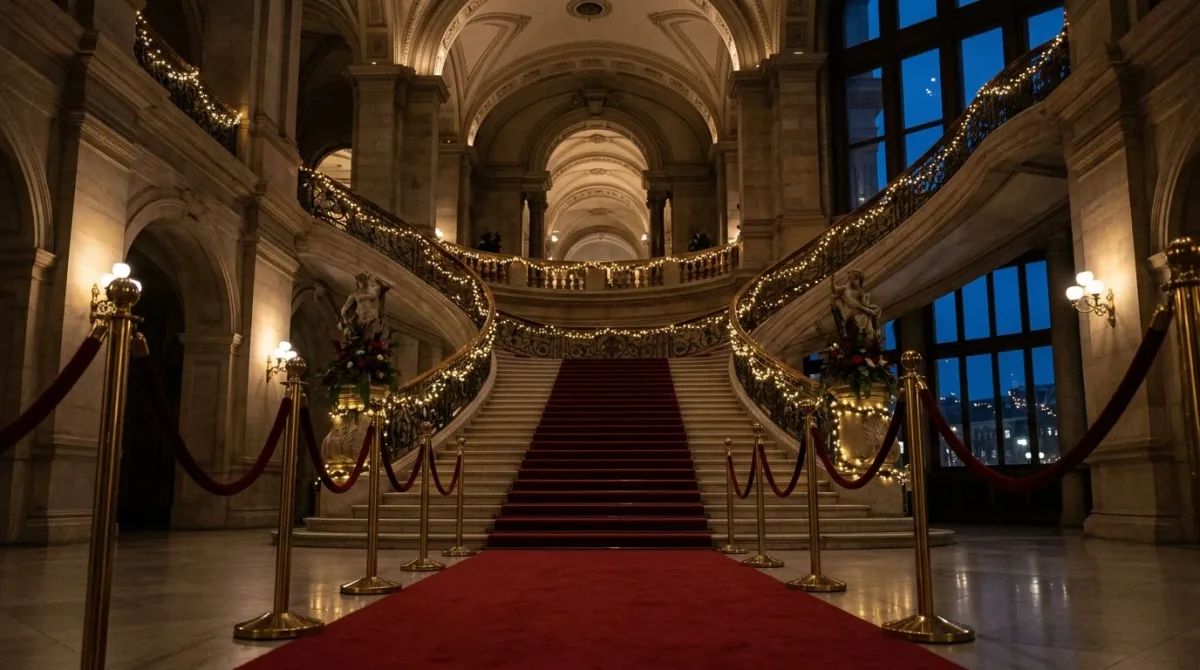
The Costume Institute Benefit — known everywhere but on its own letterhead as the Met Gala — returns each year on the first Monday in May to the Metropolitan Museum of Art at 1000 Fifth Avenue, according to the museum's own account of the event (SRC-01). What started in 1948 as a midnight supper has since become fashion's most tightly choreographed fundraiser, and most of what makes it run is a matter of institutional record rather than red-carpet rumor.
Here is how the evening actually holds together, sourced to the record rather than the whisper network.
What Is the Met Gala, Really?
Strip away the tulle and it is, structurally, a benefit dinner for a museum department. Per the Met's own description, the gala "provides the department with its primary source of funding for annual exhibitions, publications, acquisitions, and operations" for the Costume Institute, the curatorial wing responsible for the fashion exhibition that opens the same night (SRC-01). The party is the fundraiser; the exhibition is the program it funds. That pairing is the whole architecture of the evening, and it has held since Eleanor Lambert, the publicist credited with inventing the concept, first titled the gathering "The Party of the Year" (SRC-01).
Who Actually Runs the Party of the Year?
Leadership has been remarkably stable for an event this mythologized. Anna Wintour, now Condé Nast's artistic director and Vogue's editor-in-chief, has served as a co-chair every year since 1995, with the museum's own record noting only two exceptions, in 1996 and 1998 (SRC-01). Before her, the benefit's co-chairs included Jacqueline Kennedy Onassis and Patricia Buckley — a lineage the museum cites directly, and one that traces a straight line from midcentury society hostessing to the modern celebrity-industrial production the gala has become (SRC-01). The guest roster the Met describes draws, in its words, "from the worlds of fashion, film, society, sports, business, and music," which is as close to an official mission statement for the guest list as exists (SRC-01).
Why Is Everyone in White Tie?
When the dress code specifies white tie — as it periodically has — attendees are not being asked to dress up so much as to time-travel. White tie is, by the numbers, the most formal register in Western menswear: a black tailcoat, satin- or braid-striped trousers, a white wing-collared shirt and a white waistcoat, with midnight blue accepted as the sole alternative to black (SRC-02). The look traces back to the early 19th-century minimalism of Beau Brummell, and — in a detail that upends most assumptions about formalwear's timeline — white tie actually predates the black-tie tuxedo by decades; the phrase "white tie" itself only entered common usage in the 1950s, per language historian William Safire's research, as cited in the coverage (SRC-02). The practical consequence, that reporting notes, is that most modern guests do not own a tailcoat and have to source one, often at real expense, for a single night (SRC-02).
Who Gets Through the Door?
The guest list is not merely curated — it is legislated. At one point the event's organizers instituted a minimum age of 18 for attendees, an editorial decision made, in the organizers' own words, because "it's not an appropriate event for people under 18," according to reporting on the policy (SRC-03). The one carve-out is a minor accompanied by a parent, which is how a teenager with serious style credentials has been able to attend without breaking the rule, per that same reporting (SRC-03). It is a small policy, but it says something larger about how the gala is run: not as an open party that famous people happen to attend, but as a managed guest list with its own internal rulebook, revised as the organizers see fit.
Put together, that is the anatomy of the thing: a museum fundraiser, run by a small and consistent leadership team, with a dress code borrowed from a century-old formalwear tradition and a guest list governed by its own house rules. The gowns and the group chats about who wore what are the visible layer. Underneath is an operation that has changed remarkably little in its basic shape since Eleanor Lambert first called it the Party of the Year.
For a related guestlist perspective, read Inside the Met Gala Guest List, Where the Real Currency Is Access.