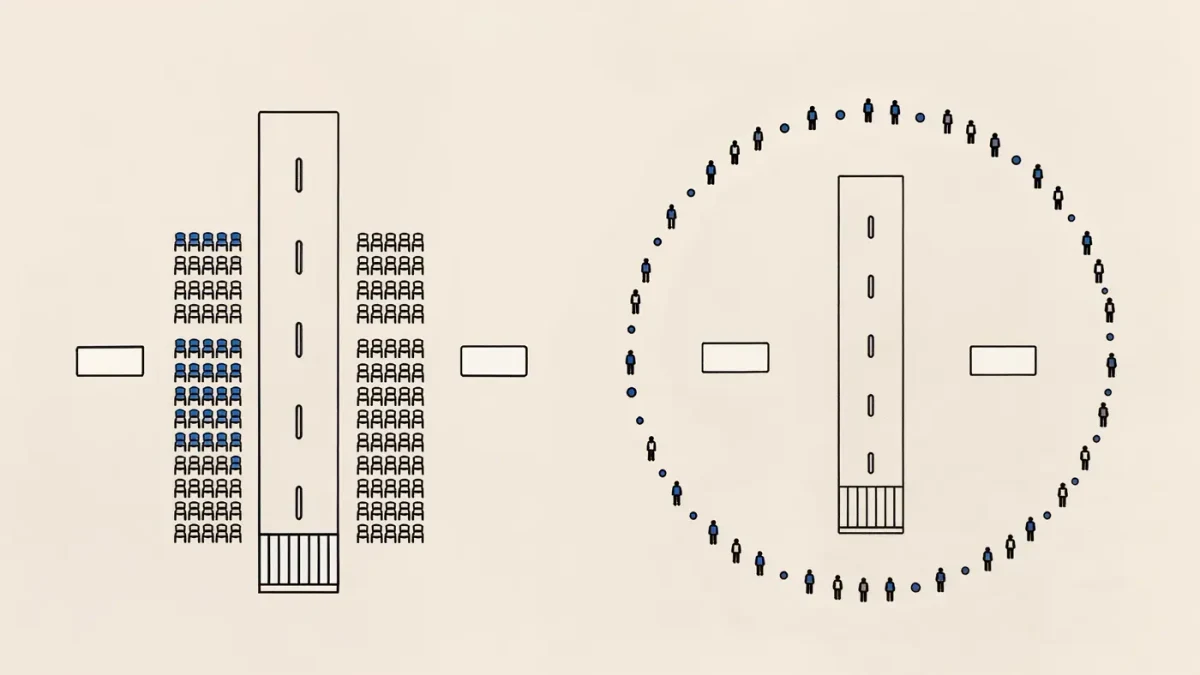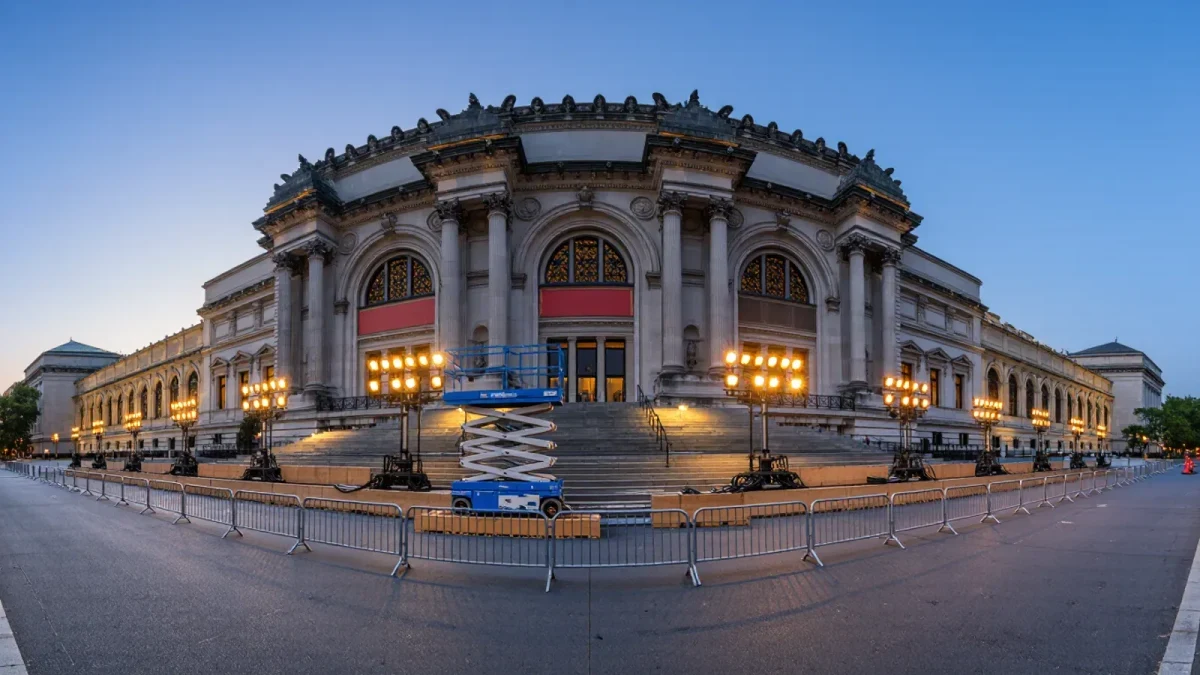
Who pays for the best seats at shows? Nobody, in cash — and that is precisely the economics. The front row at a major runway is never ticketed; seats are assigned by the house's invitations office to a ledger of editors, buyers, and celebrities whose value to the brand is measured in other currencies: ambassador contracts, media commitments, and the social arithmetic of who can be seated next to whom without incident. For contrast, consider the monetized extreme of the same logic: a table of ten at the 2025 Met Gala started at $350,000, per figures reported by The New York Times — benefits sell the seat, while shows trade the seat for leverage.
The distinction matters to how the whole circuit reads. A gala's seating chart is revenue; a show's is strategy. This piece walks the strategy, per the houses' documented practices and credited reporting.
How does a house decide who sits in the front row?
By campaign, literally. The front row is planned around confirmed ambassadors and campaign faces, whose appearances are contracted; around the season's borrowed stars, whose stylists negotiate looks and seats together; and around the buyers and editors whose orders and coverage the collection's season depends on. The invitations office keeps its own credit score — who attended last season, who wore the house to an event, whose mention moved product. A celebrity seat is a business line, approved the way any budget is.
What does a celebrity's front row seat actually cost?
There is no invoice, and that is the point. What the house pays is the surrounding package: the gown placed with the stylist, the jewelry loan, the travel and styling logistics, and — for the contracted faces — the multi-season ambassador fees that industry reporting has long placed in the millions for global houses. What the house receives is measured: photographs syndicated worldwide, a credited moment on every carpet the guest attends, and the auction of attention that a show's first row exists to concentrate. One well-placed phone photo from that row is worth more circulation than most paid placements.
Do buyers and editors pay their way differently?
In work. The seats behind the celebrities belong to the people who transact: retail directors whose orders fund the collection, editors whose coverage sustains it, stylists who redress its pieces on every carpet for the next six months. Their currency is attendance and attention — the buyer who skips a show reads as a verdict, per the trade's long-running logic of the empty chair. Standing-room overflow, when a house grants it, tends to go to the newer names still earning their ledger line.
Is the front row ever really sold?
Almost never at major houses, and the exceptions prove the arithmetic. When a fashion event does charge — as benefits do — the price is public and steep, in the Met Gala's case a reported $75,000 a seat in 2025, because what is being sold is participation, not leverage. A runway show keeps its row unpriced precisely because the house wants the power to place people, not to sell to them. The best seats in fashion are the most expensive things in the room that no money can buy. That is not a paradox; it is the business model.