Neither, strictly speaking: the person who runs a benefit gala is usually the event producer, a professional the hosts and chairs hire months in advance. The chair is the fundraising face — the Met Gala's co-chairs lend names and drawing power to a night where individual tickets were reported at $75,000 for 2024, per The New York Times — while the host committee fills tables and the producer builds the room. Titles decorate the invitation; a production schedule runs the evening.
This publishes information, not event-planning advice, and the distinctions below come from organizers' own published materials and credited press accounts rather than from any desk-side experience. But the grammar of gala titles is worth parsing, because invitations arrive in December and January with strings of names attached, and not one of those strings means the same thing.
What does a gala chair actually do?
The chair lends consequence. The role is nominally organizational — chairs preside over the benefit committee, appear in the program, and often give or raise a meaningful sum — but its real function is signal: a chair whose name carries weight tells donors and tables that the evening matters. Per the Met's published materials, Anna Wintour has served as a chair or co-chair of the Met Gala since 1995, and the announcement of each year's celebrity co-chairs functions as the event's de facto publicity launch. The chair, in short, is the title that makes other people say yes.
And the host committee?
The host committee is the fundraising engine in list form. Dozens of names — patrons, physicians, board members, social figures — each carry an implicit quota: buy a ticket or a table, and bring a couple who will. Hospital galas and regional benefit balls publish host committee sign-up deadlines and minimum give levels in their own solicitation materials; the arrangement is candid on paper even when it is glossier in the ballroom. A host committee member who sells nothing is, per the arithmetic printed on the pledge form, decorative.
Who is the honorary chair, and why does that title exist?
An honorary chair lends a name without the labor — a mayor, a museum director, a dowager eminence of the cause. The title exists to annex institutional blessing to the evening, and it costs the honoree roughly one photograph. It is the gala title closest to pure ornament, and everyone involved has agreed not to pretend otherwise.
So who runs the night itself?
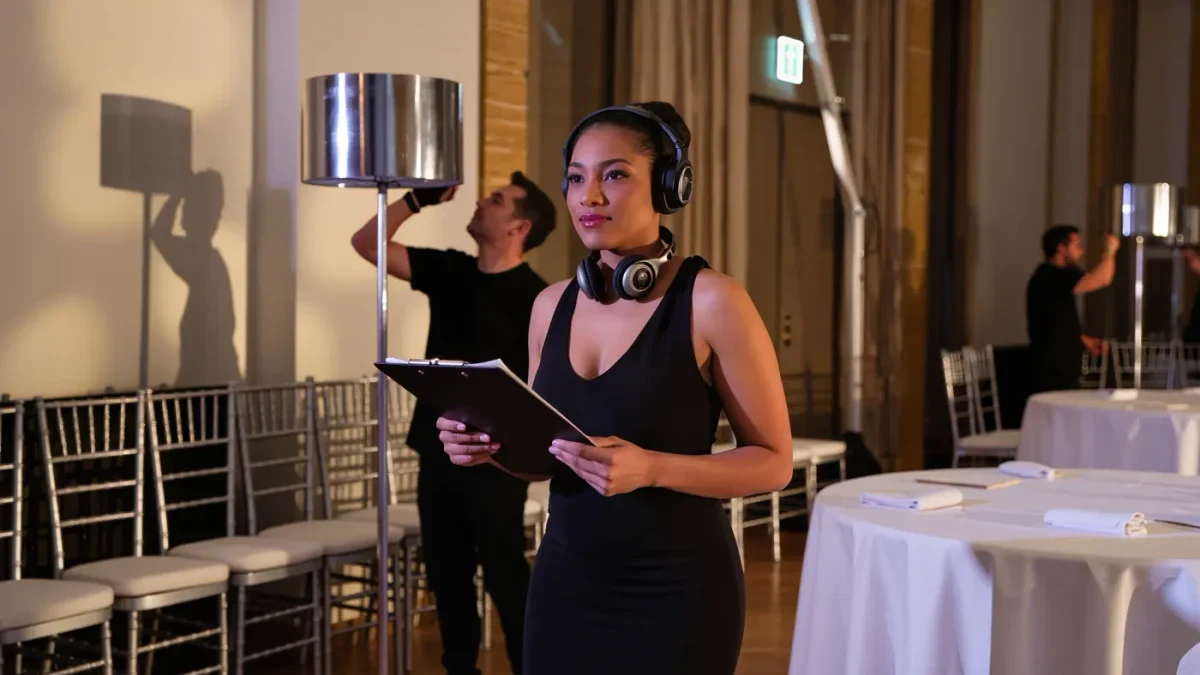
The producer, whose name appears nowhere near the invitation. Gala production is a specialty of the events industry: producers contract the caterer and the florist, sequence the cocktail hour against the dinner, rehearse the auctioneer, cue the band, and draft the run of show down to the minute. The great museum parties run on the same machinery as corporate openings — the Met Gala's production has been credited in trade coverage to professional event firms for years, because a 650-guest seated dinner that converts into a dance floor cannot be improvised by a committee of volunteers.
The division of labor, then, reads cleanly:
- The chair supplies prestige and pressure, and is measured in commitments secured.
- The host committee supplies volume, and is measured in tables filled.
- The honorary chair supplies blessing, and is measured in one portrait.
- The producer supplies the evening itself, and is measured in whether anyone notices the seams.
Why does the confusion persist?
Because the invitation collapses four jobs into one line of script. A card that reads "Chair: X · Host Committee: Y" asks the recipient to respond, not to audit; the titles are social shorthand, and shorthand flattens. The flattening is harmless until a donor accepts a chairmanship thinking it is a hosting duty, or a host assumes the chair will build the room. The cured version is simple, and benefit planners state it plainly in their own guidebooks: chairs raise, hosts fill, honorees bless, producers run.
How did so many titles pile onto one invitation?
Inflation, mostly. As benefits competed for donors through the 2010s, organizers discovered that a title costs nothing to print and can be priced in obligations: vice chairs, deputy chairs, junior chairs, emeritus chairs, chairs of the journal and of the after-party. Each rung lets the development office recognize a gift tier without discounting the top of the ladder, and a vice chair who gave at one level last year can be upgraded for the price of a comma. Per the published programs of large urban benefits as of 2024, host committees routinely run past a hundred names, and the titling has scaled accordingly.
The multiplication has a use, though. A finer ladder means more ways in: a young professional who cannot chair can co-host the junior committee, and the gala's future leadership is cultivated on the same page of the program as its present one. Title inflation, like monetary inflation, mostly redistributes; occasionally, it recruits.
Which title should a would-be gala worker take?
The one matching the labor they actually want. Anyone who enjoys persuasion and has a callable list should chair or host; anyone who loves logistics should find the producer and volunteer; anyone who wants to attend beautifully should buy a ticket, which — per the published rates for major benefits as of 2024 — does the cause more direct good than any title would. The invitation is an org chart in evening dress. Learn to read it, and the whole glittering apparatus snaps into focus, one hyphenated credit at a time.