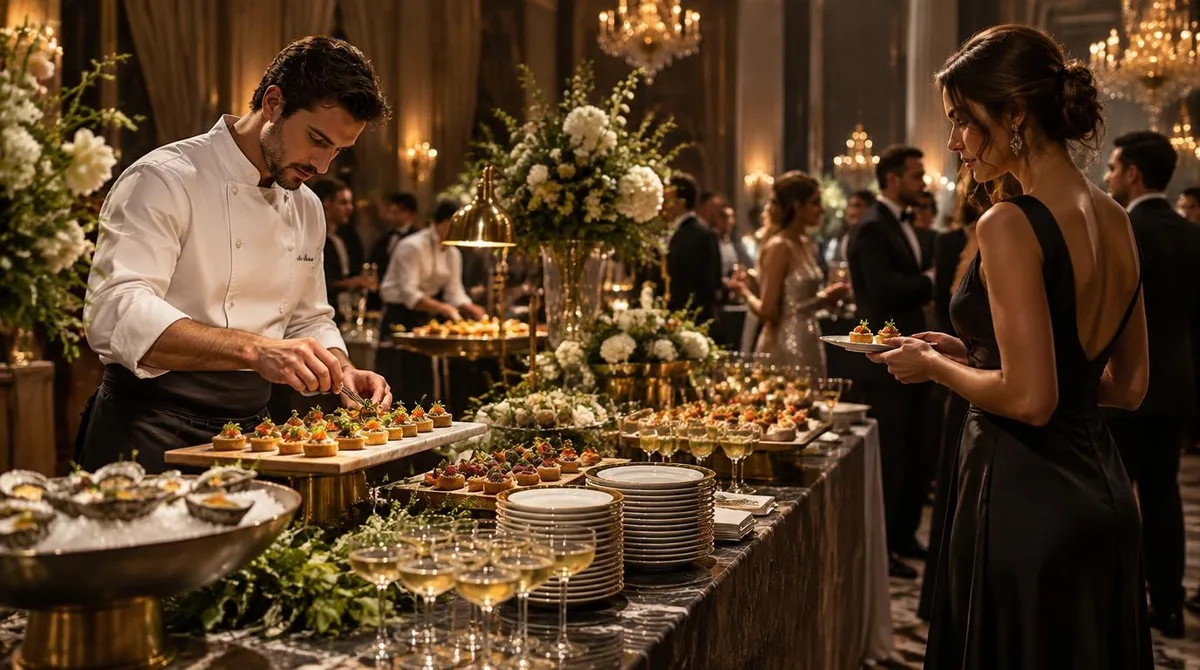
A gala dinner used to mean one thing: a plated sequence, served on cue, eaten in polite silence between speeches. That format is no longer the default. Across the benefit circuit, planners are swapping the fixed three-course sit-down for grazing tables, interactive chef stations and menus built to be discussed rather than merely consumed.
The shift is not about novelty for its own sake. It is about how an evening actually runs. A seated dinner locks guests to one table, one conversation and one timetable. A room designed around food stations keeps people moving, mingling and — the part every host secretly wants — staying longer. The menu has become part of the social machinery, not just the intermission between the cocktail hour and the paddle raise.
The word itself is contested territory. According to Wikipedia, the top result for "gala" is an Italian pop singer named Gala Rizzatto, which tells you something about how crowded the term's search results are — and how much of the evening's identity now rests on what the kitchen sends out rather than the name on the invitation.
Why are plated dinners falling out of fashion?
The short answer: they slow the room down. A plated dinner runs on the kitchen's clock, not the guests'. Courses arrive when they are ready, speeches are slotted between them, and anyone seated at a dull table is committed for the duration. For a fundraiser whose entire purpose is conversation — between donors, honorees and hosts — that is a structural problem.
Plated service also carries real costs that sit awkwardly with a charity's message. It demands a large brigade of servers, precise timing and a menu that must survive being held, plated and reheated for hundreds at once. The result, at its worst, is the gala chicken: safe, lukewarm and instantly forgettable. Planners have noticed that guests remember the room and the auction long after they have forgotten the entrée, and some have decided to stop competing on that front altogether.
There is a practical argument too. Seated dinners compress the evening into a rigid script — doors, dinner, dessert, speech, appeal, goodnight. Stations and grazing formats let the schedule breathe, which matters when a program runs long or a speaker runs over.
What exactly is a grazing table?
A grazing table is a long, abundant spread — cheeses, charcuterie, breads, seasonal produce, small sweets — arranged to be eaten standing, over the course of the evening, rather than in one seated sitting. Think of it as a cocktail hour that has been promoted to the main event. Guests drift along it, fill a small plate, and keep talking; the food is designed to be picked at, not attacked with cutlery.
Done well, the grazing table is also staging. It fills a long wall or anchors a room the way a floral installation might, and it photographs. Done badly, it is a cheese board with ambitions, and guests notice the difference within minutes. The craft lies in replenishment: a grazing table that looks stripped bare by the second hour has failed at its one job.
For hosts weighing the format against a traditional dinner, the trade-offs are worth reading in full — our guide to how to plan a charity gala step by step covers where food decisions sit in the wider sequence.
What makes an interactive chef station work?
An interactive station puts a cook, and often a small piece of theatre, in front of the guest: pasta finished to order, a carving board, a dessert assembled in the moment. The food is fresher because it is made when asked for, and the exchange gives guests a natural conversation prompt — the one reliable icebreaker that requires no name tags.
The format also solves the dietary question more gracefully than a plated menu can. A row of varied stations lets a guest who avoids meat, gluten or alcohol build a plate that suits them, without the awkward advance-form ritual of requesting a special meal that arrives conspicuously different from everyone else's. In a room where seating charts are read as social statements — and they are, as our piece on how gala seating charts are arranged explains — removing the fixed table also removes a layer of politics. We covered a connected angle in Gala Seating Arrangement — Gala Seating Charts: How Tables Are Arranged and Why Placement Matters.
The discipline required is real, though. Stations need space, queue management and enough cooks to hold quality through a peak. A station that runs out, or a line that snakes across the dance floor, undoes every advantage the format offers.
What this means for planners and guests
For planners, the food decision has become a program decision. If the evening's job is fundraising, the menu must serve the ask: leave hands free for paddles, keep the room audible during appeals, and avoid a service schedule that collides with the live auction. If the evening's job is celebration — a museum opening, a launch — stations buy mingling time that a seated dinner cannot. Our look at how a charity gala actually makes money traces why that distinction matters down to the tax receipt. For related coverage, see How a Charity Gala Actually Makes Money, From Table to Tax Receipt.
Practical steps for anyone building the menu shortlist:
- Match the format to the program: seated for a speech-heavy fundraiser, stations for a mingling-led celebration.
- Count the queues before the courses. Station service lives or dies on flow, not recipes.
- Plan replenishment explicitly. A grazing table is a performance that runs all night.
- Build dietary range into the stations themselves, so no guest needs a special meal.
For guests, the change is mostly a relief. Dress still carries the evening — our dress code decoder handles that — but the plate no longer demands formal cutlery discipline, and nobody is trapped beside an assigned stranger for ninety minutes. The room, not the table plan, becomes the company.
The last course is a conversation
What the evidence of the circuit supports is a simple conclusion: gala food has moved from fuel to furniture. The menus that guests repeat on the way home are the ones that gave them something to do while talking — a station to watch, a table to graze, a cook to ask a question of. What remains unknown is where the pendulum settles; formal seated dinners still suit certain occasions, particularly those built around honorees and tributes, and no format has retired them outright. The trend worth watching is not the death of the plated dinner but the rise of the hybrid: a short seated moment for the program, then a room that lets the food keep the party going.