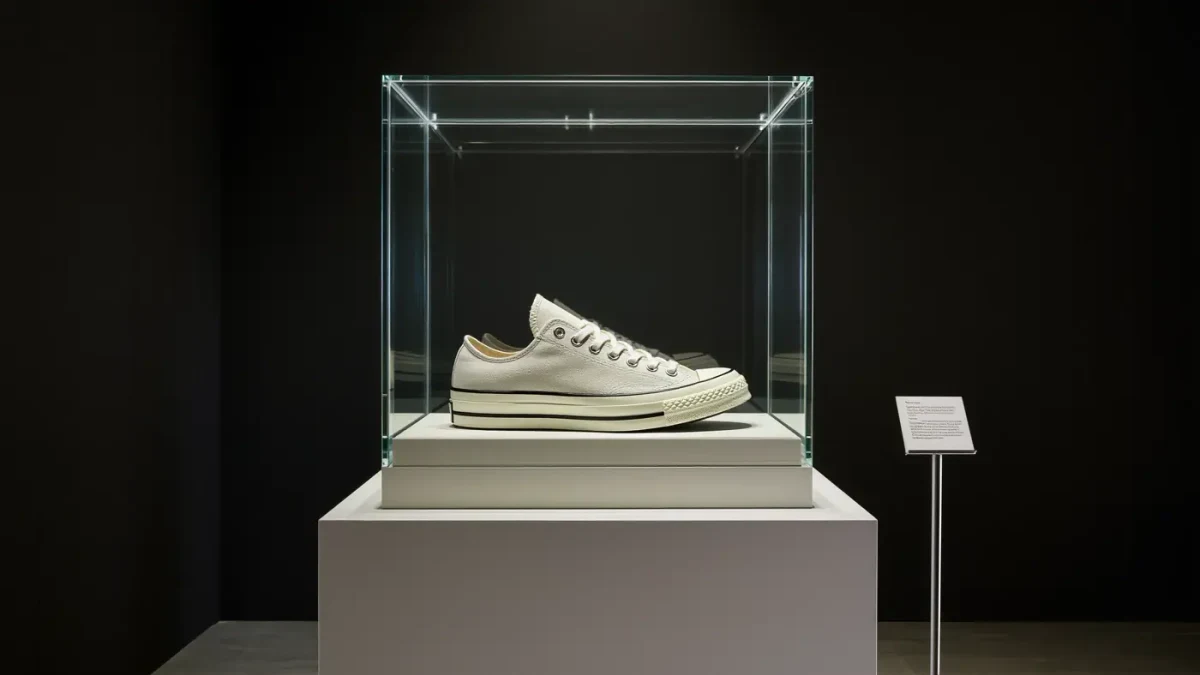
The drop model is fashion's answer to a question the industry spent decades avoiding: what if the product sold out before anyone could want it patiently? A drop is a limited release on a published date, often at a fixed hour, in quantities the brand knows will not satisfy demand. It has since migrated from streetwear into everything, running alongside a resale economy that, per ThredUp's 2024 industry report, valued global secondhand apparel at roughly $197 billion as of 2023. Scarcity stopped being a supply problem and became the marketing plan.
Where did the drop model come from?
The documented lineage runs through streetwear. Skate and sneaker labels of the 1990s and 2000s, working with small factories and no wholesale distribution, released product in small batches on short notice — and discovered that the sellout itself was the advertisement. The pattern was industrialized in the following decade: limited weekly releases, raffles instead of queues, and resale prices that functioned as a public scoreboard for demand. Luxury then borrowed the machinery, with heritage houses staging collaborations and capsule releases that vanished in hours. What began as a constraint of small-batch manufacturing, per the trade's own histories, was repackaged as a deliberate strategy of desire.
Why does scarcity sell?
Because it converts hesitation into urgency and urgency into a queue, and the queue does the advertising. Behavioral research on scarcity has long documented that limited availability raises perceived value; the drop model operationalizes the finding with a countdown clock. Per the way brands describe their own releases, the drop also solves an inventory problem that plagues fashion: no markdowns, no dead stock, no warehouse of unsold optimism. The brand produces what it can sell and lets disappointment, rather than discounting, absorb the excess demand.
The resale market completes the incentive loop. When a sold-out item trades above retail within the hour, the drop acquires a speculative audience — buyers who purchase not to wear but to resell — and every resale listing becomes free marketing for the next release. Critics, per their own published arguments, note the obvious costs: bots siphon stock, speculators crowd out wearers, and the teenager who merely wanted the jacket learns to check prices like a trader.
How is a drop actually run?
- The tease: a cryptic image or date posted weeks out, shared precisely because it explains nothing.
- The raffle or app queue: per standard practice, hyped releases now run on lottery entry or timed online queues to blunt bots — imperfectly.
- The fixed hour: drops go live at a published minute, usually mid-morning, so the audience assembles in advance.
- The sellout: minutes long, sometimes seconds, and instantly screenshotted as evidence of the brand's heat.
- The resale echo: secondary prices trend on the same day, and the coverage writes itself from there.
Did the drop kill the launch party?
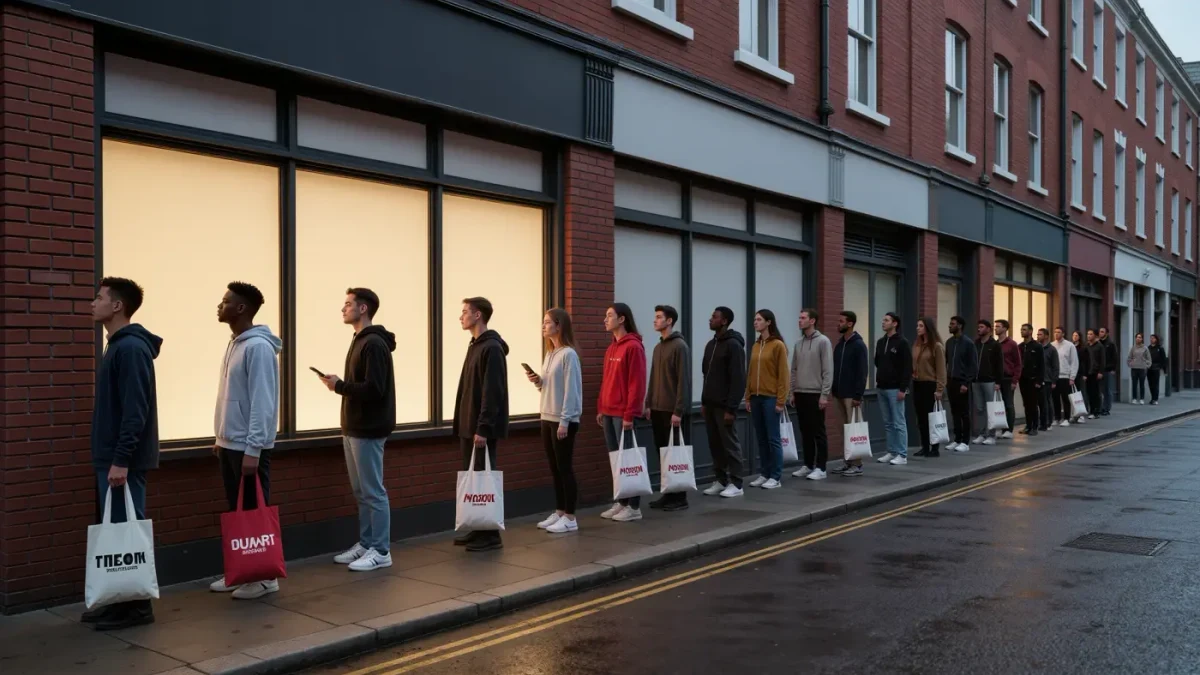
It absorbed it. The drop's release date now carries the social freight the launch party once hauled alone: brands stage pop-ups, preview dinners, and morning queues with cameras, so the release date reads as an event even when the event is mostly a website refresh. Per the documented habits of streetwear houses, the line outside the store is the party, photographed from the corner like any velvet rope. Fashion, ever adaptive, has learned to hold its parties in public and charge admission in patience.
The drop model's durability rests on a simple trade: the brand gives up volume — it could make more, and chooses not to — and receives, in exchange, full-price sales, a heat index that never cools, and a calendar where every few weeks arrives with a small drumroll. Per the resale data through 2023, the secondary market's growth only sharpens the instrument. Scarcity, once a failure of supply, is now the most reliable line in the marketing plan.
What does running a drop actually demand of a brand?
Discipline, mainly, and of an unusual kind: the willingness to leave demand unsatisfied on purpose. Per the way operators describe the mechanics, a drop brand holds a tight loop of design, small production runs, and rapid release, which means owning or closely controlling manufacturing, refusing the wholesale calendar, and running its own channels — an app, a flagship, a newsletter — with the punctuality of a train timetable. The format punishes sloppiness publicly: a crashed website at the release hour is the drop's equivalent of a fashion show with the lights out.
It also demands a different relationship with the customer. Seasonal fashion courts patience — pre-orders, layaway, an eventual markdown; the drop courts reflex. Per the trade's own post-mortems, the brands that sustain the model are the ones whose releases arrive often enough to keep the audience checking in but rarely enough that any single drop feels routine. Frequency is the thermostat of the whole apparatus, and most brands that fail at drops fail there: too many, and the scarcity dissolves; too few, and the audience's attention is hired away by a rival's countdown.
Is the drop model spreading beyond streetwear?
Well past it, per the documented record. Sneaker culture invented the machinery, streetwear industrialized it, and luxury houses borrowed it for collaborations and capsules; beauty brands now stage limited-ingredient drops, and even consumer-electronics launches have adopted countdown-and-sellout choreography. The clear signs of mainstreaming are visible in the supporting industries: queue-management software, raffle platforms, and authentication services now form a small infrastructure economy around the release calendar. What began as a workaround for labels too small to fill a factory order has become, per the resale data through 2023, one of fashion's most exported ideas — a launch template with a queue where the party used to be and a receipt where the press release ends.