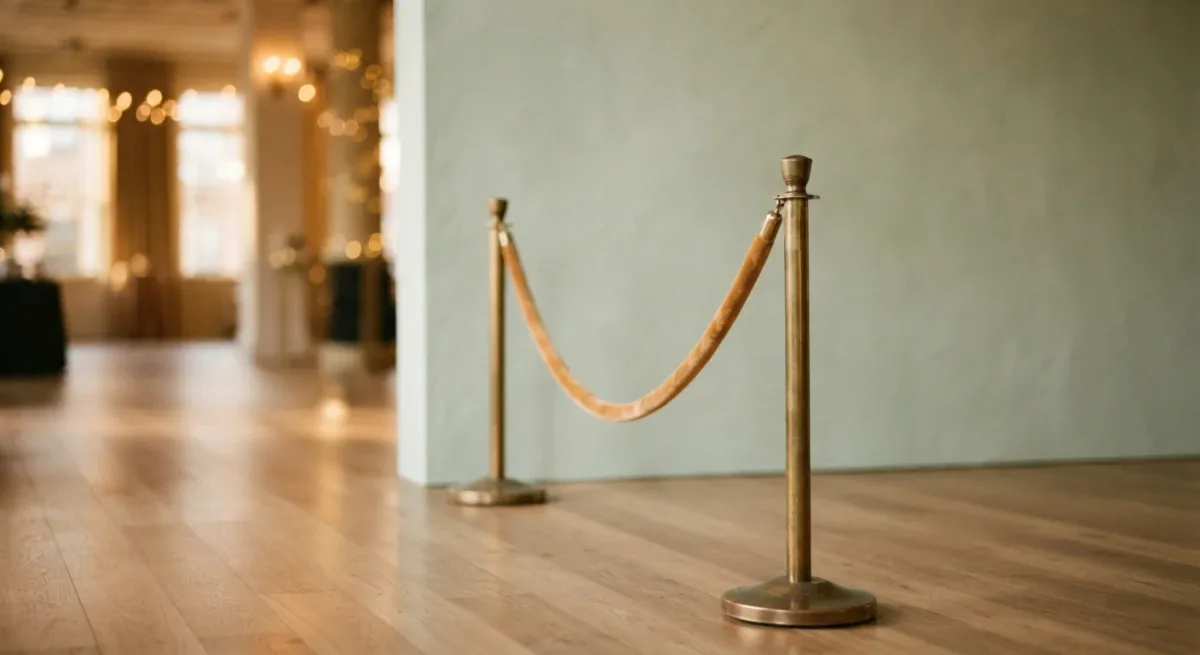
A step-and-repeat — the branded backdrop guests pose before — is a photographic tool built for credit: it places the sponsor's logo into every published image, a mechanism the fashion and film industries have run since at least the 1960s, per industry histories of press photography. The modern red carpet is an industrialized photo op with call times, stations, and a strict choreography, not an accidental corridor of photographers. The wall is the quiet invoice at the center of it.
What actually happens on a working carpet?
Guests arrive on a schedule set by publicists — the most photographed arrivals placed to avoid dead carpet, per the accounts of event producers published across industry outlets. The walk moves through documented stations: the step-and-repeat for sponsor imagery, the outlets' positions for editorial photography and interviews, and often a portrait room at the end. Timing is contractual in spirit if not on paper; a premiere's carpet typically runs 90 minutes to two hours before screening, and every publicist knows the math.
Why is it called a step-and-repeat?
Because guests step to the wall, are photographed, and repeat — the name describes the mechanic. The backdrop's logos are arrayed so that any crop carries them, per the standard design practice described by event producers: staggered, repeated, never behind the face. It is advertising that works at any aspect ratio.
Who pays, and for what?
The economics run three ways, per published industry reporting:
- Sponsors underwrite events partly for backdrop placement — the logo wall is inventory, priced accordingly.
- Brands dress guests for the exposure; a single much-photographed gown can generate coverage valued in the millions of earned-media impressions, per fashion-business analyses of red carpet impact.
- Publicists trade access: outlets get stars, studios get coverage, and the guest list is the currency that balances both.
How did the red carpet become fashion's stock exchange?
Through two documented escalations. The first was the industry's formalization of stylist culture from the 1990s onward — credited styling became a profession, and the carpet became a runway with better lighting. The second was social media: once images circulated instantly, the carpet's value as an advertising surface multiplied, a shift fashion-business reporting has documented since the early 2010s. What began as a courtesy walk became, in effect, a listed market for gowns.
What is the honest read?
That the carpet's glamour is real and its spontaneity is theater — the good kind. The best-dressed arrivals are usually the best-planned ones, and the wall behind them is doing quiet arithmetic all evening. The spectacle deserves its affection; the spreadsheet deserves a nod too.
For more context, read At the Oscars, the Red Carpet Stopped Being Red.