What does a designer exit statement actually say? On the page, four things in order — gratitude, the house's name, the word honor, and no questions taken. Beneath it sits the real message, and the industry reads both fluently: a warm, unhurried farewell signals a choreographed handover with a successor already chosen; a terse, two-line note signals that the lawyer, not the communications team, had the final pass. The genre has become one of fashion's most disciplined forms, and the exits of 2024 and 2025 supplied a masterclass in its registers.
What follows is a reading of the form through documented announcements — the statements themselves, as issued — not gossip about the rooms where the decisions were made.
What did the big exits of 2024-2025 look like?
Three registers, three announcements. Hedi Slimane's departure from Celine, announced by the house in October 2024, arrived with public friction over successor timing — a reminder that exit statements and exit circumstances need not match. Maria Grazia Chiuri's exit from Dior, confirmed in May 2025 after nine years that reshaped the house's feminist vocabulary, was handled as a graceful close ahead of Jonathan Anderson's June 2025 appointment across the maison's men's and women's lines. And Dario Vitale's departure from Versace in December 2025, after a single collection, landed inside the news of the Prada Group's completed acquisition — a case where the statement had to share a page with a balance sheet.
Why are exit statements so uniformly polite?
Because they are legal documents wearing evening dress. A departing creative director typically remains bound by confidentiality and non-disparagement terms, so the statement is drafted by lawyers and communications staff in tandem, and its uniform gratitude is not insincerity — it is contract compliance. The result is a genre where what is missing matters more than what is printed: the absence of a named successor, the absence of a farewell show, the absence of a quote from the departing designer at all. Each omission is legible to a trade that reads these notes the way diplomats read communiques.
What does a successor announcement change?
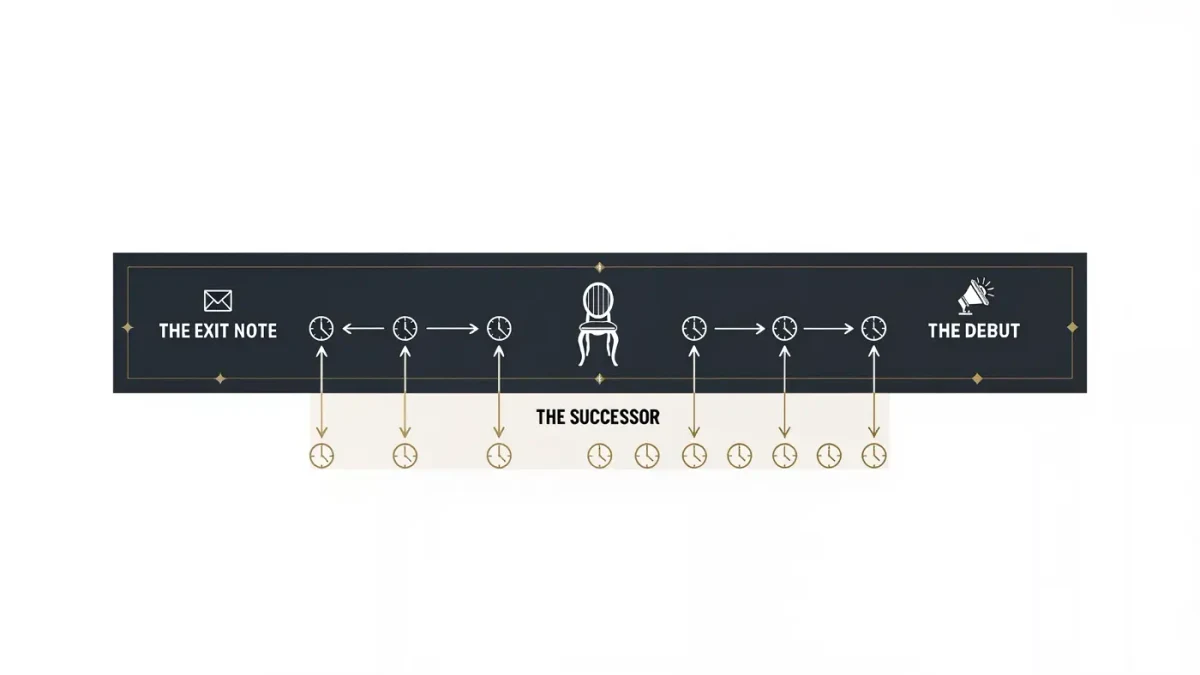
The entire social calendar downstream. The moment a new name is confirmed — as when Pierpaolo Piccioli was named to Balenciaga in 2025, or Demna to Gucci — the season's front rows, carpet placements, and archive loans begin reorganizing around the question every stylist asks first: what will the new direction be? A debut collection doubles as a premiere, with its seating chart contested months out, and the exiting designer's final show acquires the atmosphere of a state farewell. The statement itself is merely the first document in a file the industry will assemble in public.
Is the genre changing?
Slowly, and mostly in length. The polite form persists — no major house benefits from a public grievance — but the cadence has accelerated: tenures shorten, statements arrive closer to the news, and the departure note is increasingly published within hours of the successor's own announcement, packaging both documents as one story. Per the 2024-2025 record, the constant is what it always was: the house thanks the designer, the designer thanks the house, and everyone in the front row reads the subtext at speed. Fashion's farewell note has not changed its words. It has only gotten faster.