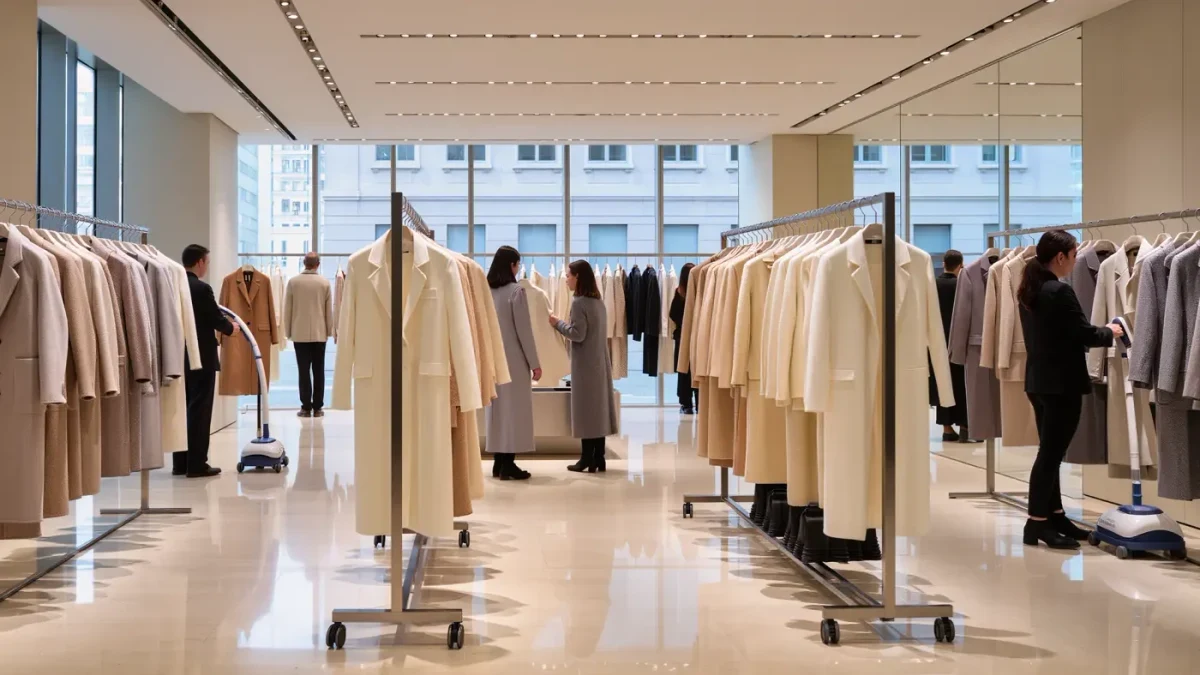
The show season matters to stores for one unglamorous reason: it is how the floor plan gets written. A runway look is a sales pitch delivered to buyers months before a customer sees it, and the health of that order book is visible in the sector's numbers — per Reuters, on October 14, 2025, LVMH's third-quarter organic sales rose 1 percent to €18.28 billion, the group's first growth of 2025, while per Kering's release of October 22, 2025, group revenue fell 10 percent as reported to €3.42 billion. Retail floors are where those two trajectories are finally installed.
A framing note: this is a walk through the mechanics of how shows become merchandise, not a guide to buying the sector — RSV TV Magazine covers the circuit, not the portfolio.
What does a show actually send to a store?
Two shipments, conceptually. The first is the runway collection itself, of which buyers order a curated fraction — the pieces a boutique's clientele will actually wear, in the sizes and colors the room can move. The second, and commercially heavier, is the pre-collection: the resort and pre-fall lines shown to buyers in advance of the runway, which per long-standing industry practice account for the majority of many houses' annual volume. The show is the advertisement; the pre-collection is the invoice.
How long is the runway-to-retail lag?
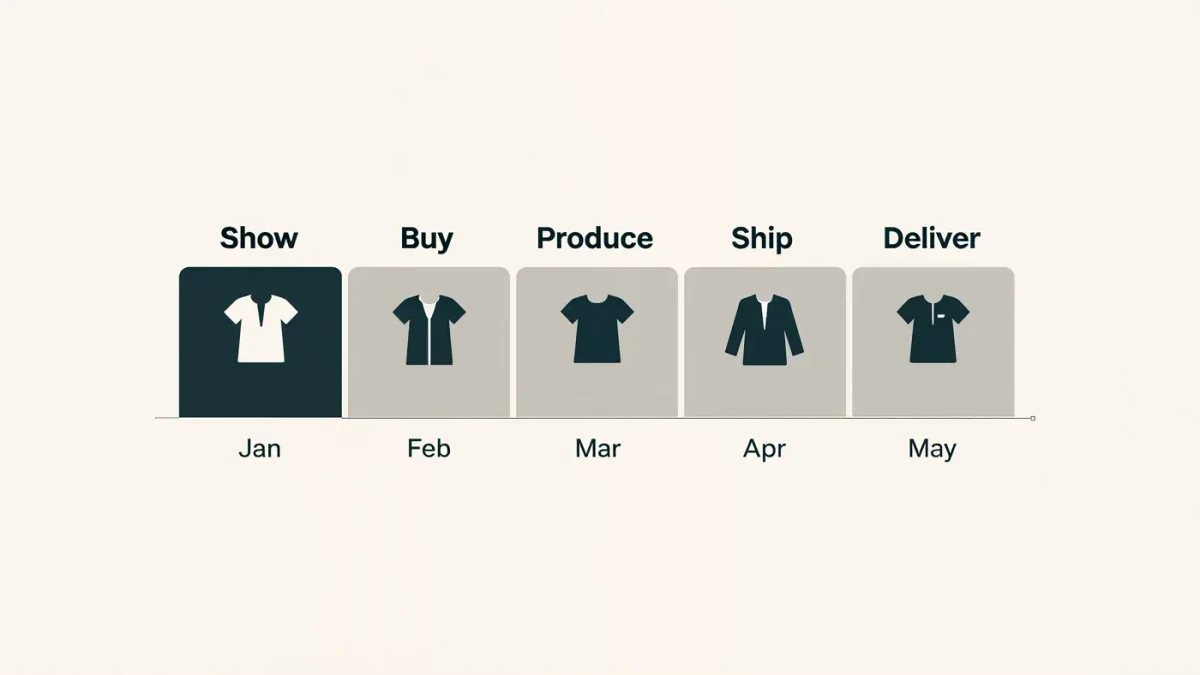
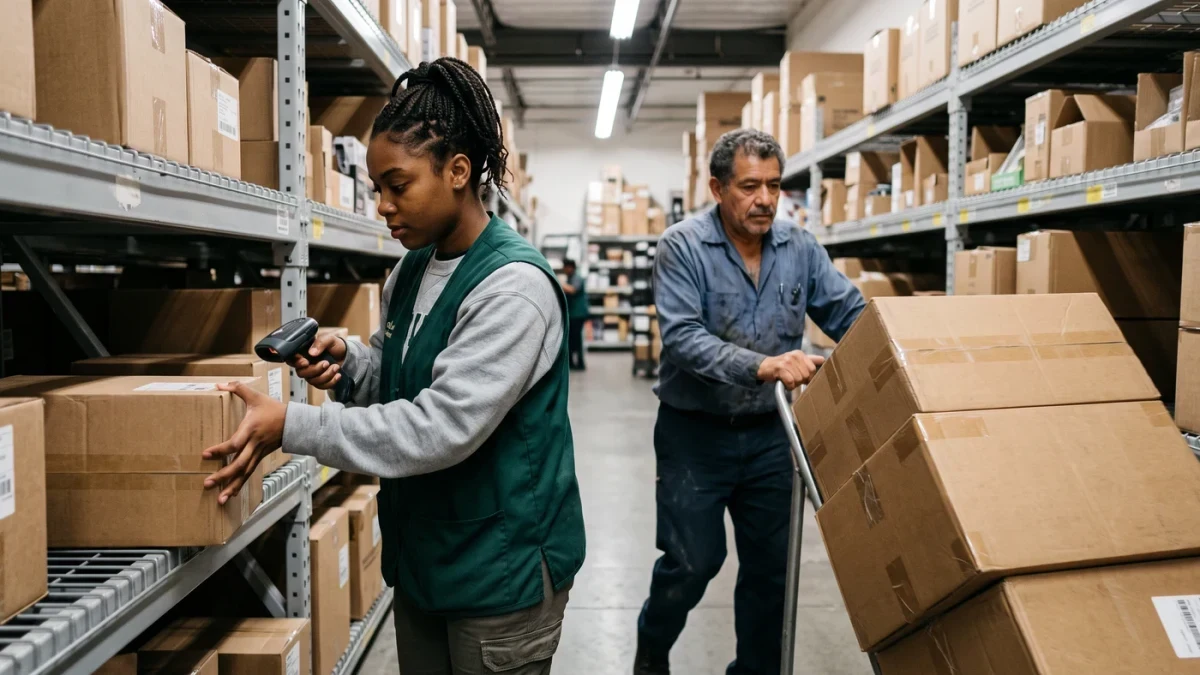
Roughly six months, on the traditional model — a September show in Paris lands in boutiques the following spring, after production, shipping and the floor-set calendar. That lag is why buyers order against instinct rather than weather: a coat ordered in October is a bet placed two seasons out. The drop model and see-now-buy-now experiments of the past decade tried to compress the gap, and most houses drifted back to the standard rhythm, whose costs are understood even if its pace is not.
What do the 2025 numbers mean for a boutique floor?
Selective restocking. A sector where LVMH returned to a single percent of organic growth in the third quarter of 2025, and Kering's comparable decline slowed to 5 percent, is a sector buying inventory carefully: fewer speculative pieces, more replenishment of proven sellers, tighter orders of the statement looks that anchor a window. For the shops, the show season's afterglow — the press coverage, the carpet placements, the launch parties — is the marketing that makes a conservative order book perform.
Where does the evening circuit fit in?
As the moving crew. A gown that walks the carpet in awards season arrives in stores already famous, and boutiques time their deliveries to that drumbeat: the film premieres, the gala dates, the launch parties that give a collection its public premieres before a single hanger reaches the floor. Stores do not sell the spectacle; they sell what the spectacle proved desirable — and per the October 2025 filings, they will be proving it with a leaner, more deliberate selection than in the fat years. The seating charts are data, too: buyers read which editor sat where and which film star left early, because a show’s room is the first focus group a collection ever faces, and the floor follows the room.