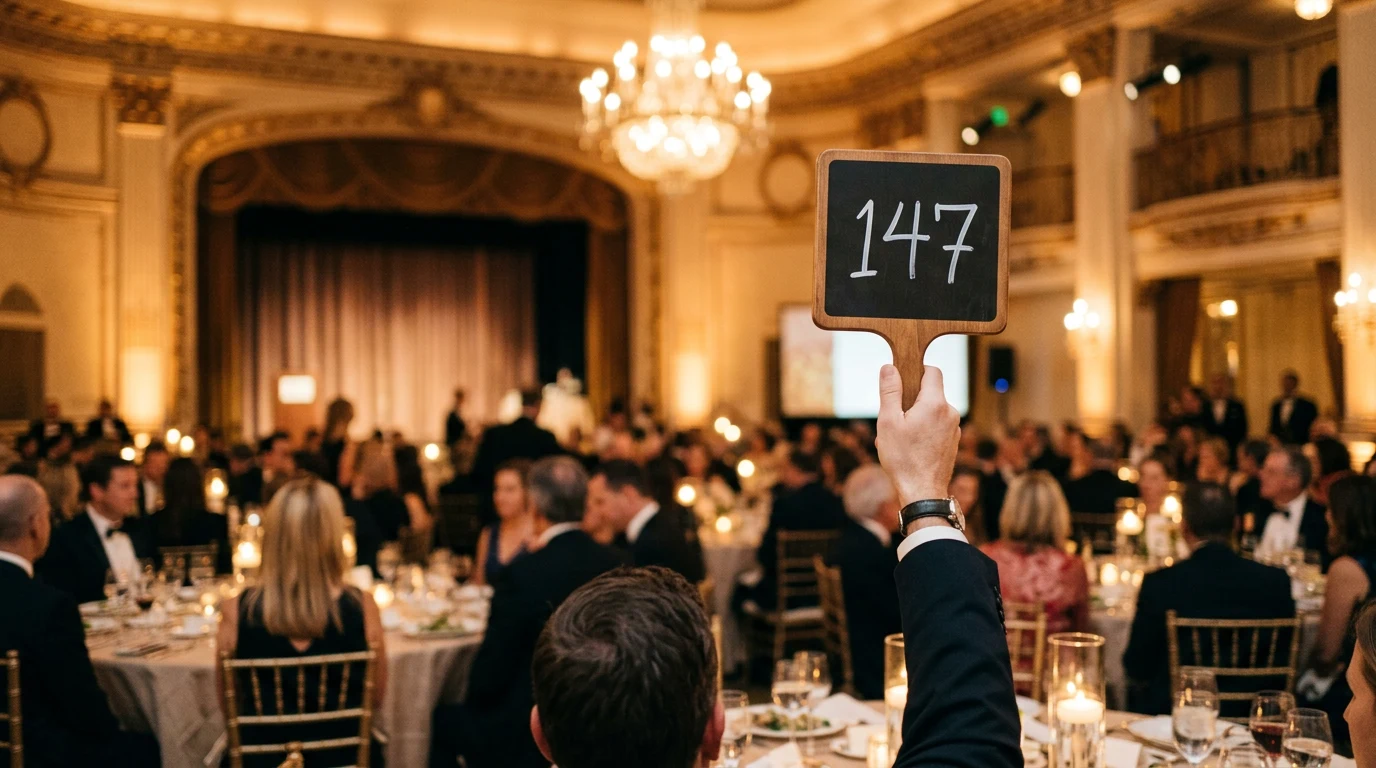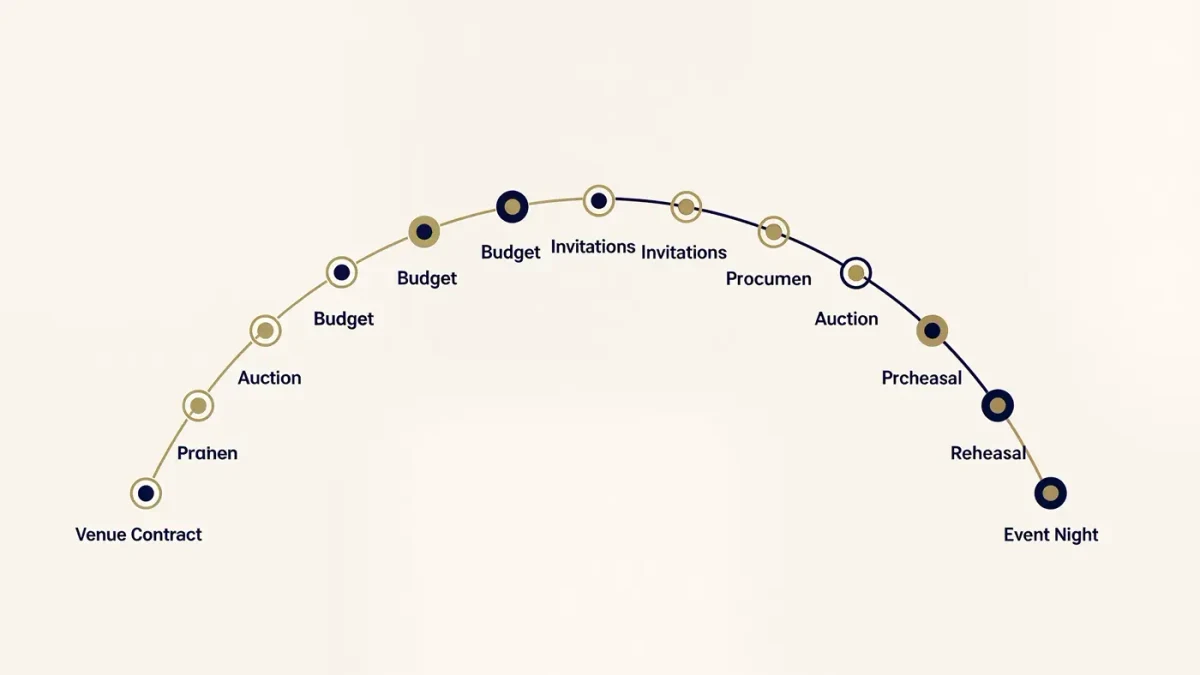
A major benefit gala is planned on a twelve-month cycle, and the clock starts with the venue: desirable ballrooms and museum courtyards book a year or more ahead, per standard practice in the special-events industry, which is why January's invitations describe a room contracted the previous winter. The scale explains the lead time — the Met Gala's tickets were reported at $75,000 apiece for 2024 by The New York Times, and an evening carrying that arithmetic is not organized in a season. Everything else on the calendar hangs off the venue date. Twelve months is not a preference but a physics: invitations print in the fall, sponsors budget on fiscal years, and the room itself must be held before anyone can be asked to fill it.
This publishes information, not event-planning advice; what follows is the documented rhythm of the benefit calendar, reconstructed from organizers' published materials and credited trade coverage, arranged as the year actually unfolds.
What happens in the first three months of the cycle?
Contracting and arithmetic. The benefit committee locks the date and signs the venue, then sets the fundraising target and works backward: if the goal is a seven-figure net, the gross must cover catering, production, and the honoree's dinner before a dollar reaches the cause. Per published benefit solicitation materials, committees at this stage set ticket and table tiers, recruit the chair and host committee, and confirm the honoree. The glamorous decisions are, at this point, entirely invisible; what exists is a spreadsheet with a personality.
When do the invitations and the money machine come together?
Months four through six belong to the ask. Save-the-dates are designed and mailed, journal and sponsorship packets go to last year's buyers, and the auction committee begins soliciting lots — travel packages, art, couture — from donors whose names live in the development office's records. Per the industry's own guidebooks, auction procurement is a year-round trade; the best lots are promised before the printed catalogue exists. Somewhere in this stretch the program is drafted: who speaks, who performs, and how many minutes each is allotted, a document that will be rehearsed within an inch of its life.
What does the final quarter look like?
Volume and detail. Final guest counts land in month ten, seating charts are negotiated with the delicacy of a treaty, and the production team — caterer, florist, lighting, sound — walks the room and drafts the run of show. In the last two weeks, the timeline compresses into days: floral load-in, table build, rehearsal for speakers and auctioneer, then the tasting that settles the menu. The night itself, when it arrives, is the calmest three hours of the year; every crisis has already been survived on paper.
How long does the biggest gala's cycle actually run?
Longer than twelve months. The Met's exhibition and gala operate on a multi-year horizon — exhibition themes are announced many months ahead, and per the museum's published materials the Costume Institute plans its shows years in advance — while amfAR's Cannes benefit, which the foundation's published materials credit with raising well over $200 million across three decades as of the mid-2020s, repeats its cycle annually against the fixed dates of the film festival. Fixed calendar events inherit their lead time from the calendar itself.
Who is on the planning committee, and what do they decide?
A working benefit divides its year among subcommittees, each with a named brief: auction, journal and sponsorships, hospitality, young professionals, and the always-dreaded seating. Per the committee structures printed in benefit journals and programs, the auction subcommittee owns lot procurement and the catalogue; hospitality owns catering menus, florals, and the tabletop; the journal subcommittee sells the ad pages that pad the net without adding a chair to the ballroom. Decisions escalate to the benefit chair and the organization's development staff, who hold the budget and, with it, the veto. The structure is unglamorous and entirely load-bearing — the evening's polish is the visible surface of perhaps forty volunteers who have been arguing, courteously, since last winter about charger plates.
What can still go wrong at the end?
Weather, illness, and arithmetic. Outdoor benefits hedge with tents contracted on options; speakers hedge with understudies; and the fundraising target hedges against a soft table year with a journal, a raffle, and an urgent final appeal scripted into the program. Veterans describe the last week as quiet by design: the run of show is printed, the rehearsal is scheduled, and the only acceptable surprises are the ones that photograph well.
What does a first-time gala's compressed version look like?
Six to nine months, per the planning guides published by fundraising associations, and the compression is paid for in options: fewer venue choices, a thinner auction, a host committee recruited at a sprint. The sequence survives intact even when the calendar shrinks:
- Venue and date, before anything else.
- Budget, target, and ticket tiers.
- Chair, honoree, and host committee.
- Invitations, sponsorships, and auction procurement.
- Production walk-through, run of show, rehearsal, load-in.
The sequence also explains the season: invitations mailed in autumn describe rooms contracted the previous winter, which is why gala season lands where it does, stacked into spring like ferries into a harbor. The order is not negotiable, which is why veteran benefit planners read an invitation's postmark the way sommeliers read a vintage: twelve months out is confidence; six weeks out is a story the committee will tell for years, and not fondly.