A gala's fundraising escalates by design: the silent auction warms the room with low-stakes bidding, the live auction concentrates the evening's biggest spenders on a handful of lots under a professional benefit auctioneer, and the appeal — the direct ask, paddle raises for named giving levels — closes the night at whatever altitude the room will bear. The sequence is documented across the benefit industry's own materials, and it exists because the order matters: an evening that opens with its largest ask stalls, while one that climbs to it clears. Major benefits run the ladder nightly — the Met's 2023 gala, cited to the museum, reported proceeds above $22 million — with the auction and appeal as its steepest rungs.
This publishes information, not fundraising or legal advice; the mechanics below follow organizers' published programs and the documented practice of the benefit-auction profession.
What does the silent auction actually do?
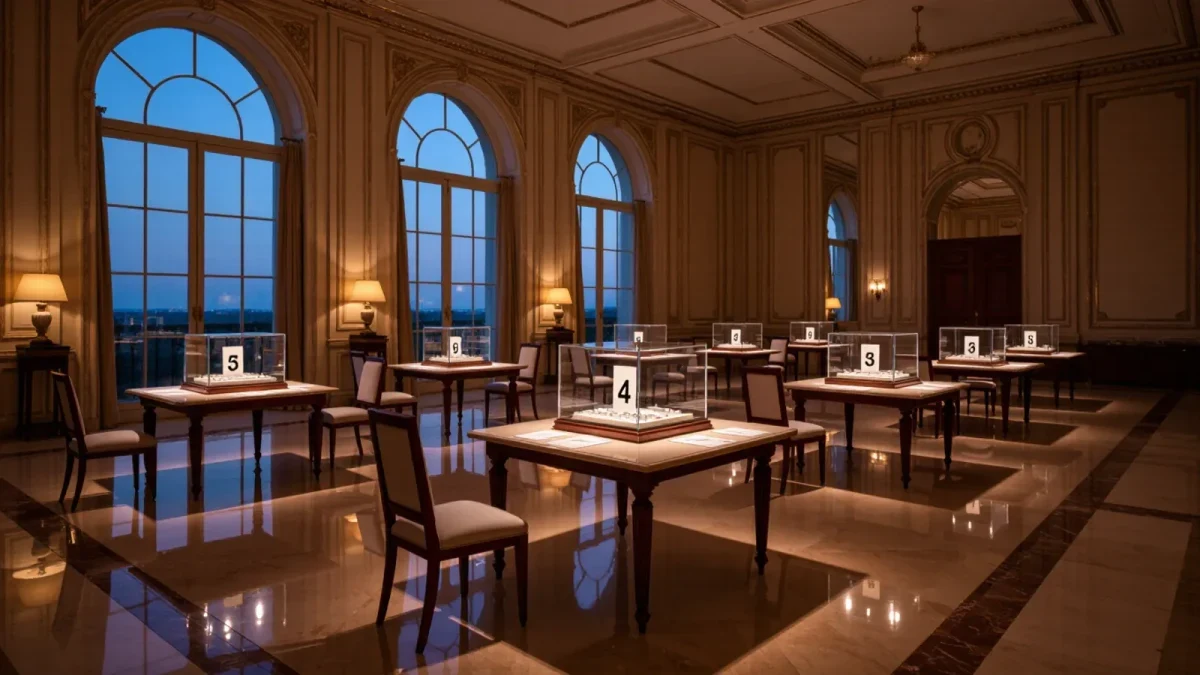
Three jobs, all unglamorous and all essential. Per the industry's planning guides, the silent auction — printed sheets or mobile bidding beside displayed lots — gives every guest something to buy, sets a floor under the evening's giving, and, crucially, teaches the room to bid before anyone is watching. Its lots are mid-value: restaurant wine dinners, spa weeks, signed memorabilia. Mobile bidding platforms have stretched the silent auction's timeline, per the platforms' own published practice, letting supporters who never entered the ballroom bid from home — the clipboard, at this point, has quietly become software. The silent auction's real product, though, is momentum; it is the evening's opening act, priced to include everyone.
Why does the live auction need a professional auctioneer?
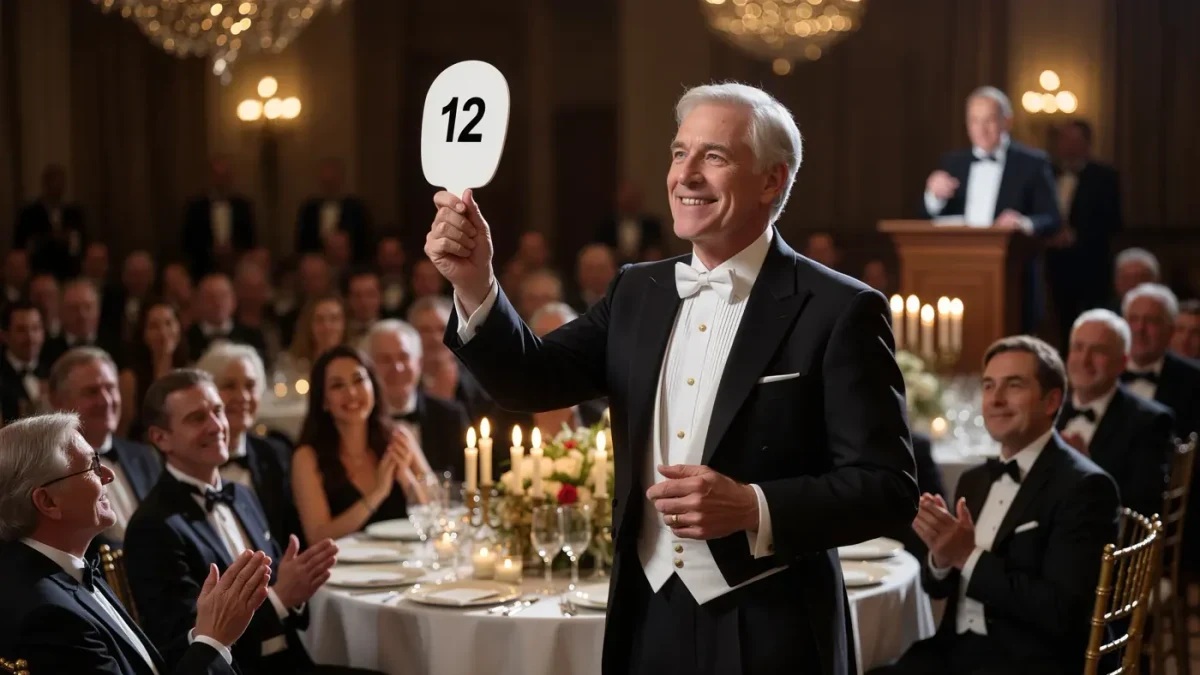
Because the lots are worth too much to improvise. Benefit auctioneers are a documented specialty — credentialed through auctioneer associations, per the profession's own materials — and organizers hire them because a skilled caller converts hesitation into increments: the playful pause, the two-bidders-only framing, the raise sized to the room's temperature. Per the profession's published claims and organizers' reported results, professional benefit auctioneers routinely outperform untrained volunteers by multiples on identical lots. The lots themselves are curated scarcity: travel with access, art from the exhibition's orbit, one couture commission. AmfAR's Cannes benefit, per the foundation's published materials, has built its three-decade, eight-figure cumulative total — reported above $200 million as of the mid-2020s — substantially on auction lots and the celebrity theater of selling them.
What happens during the appeal?
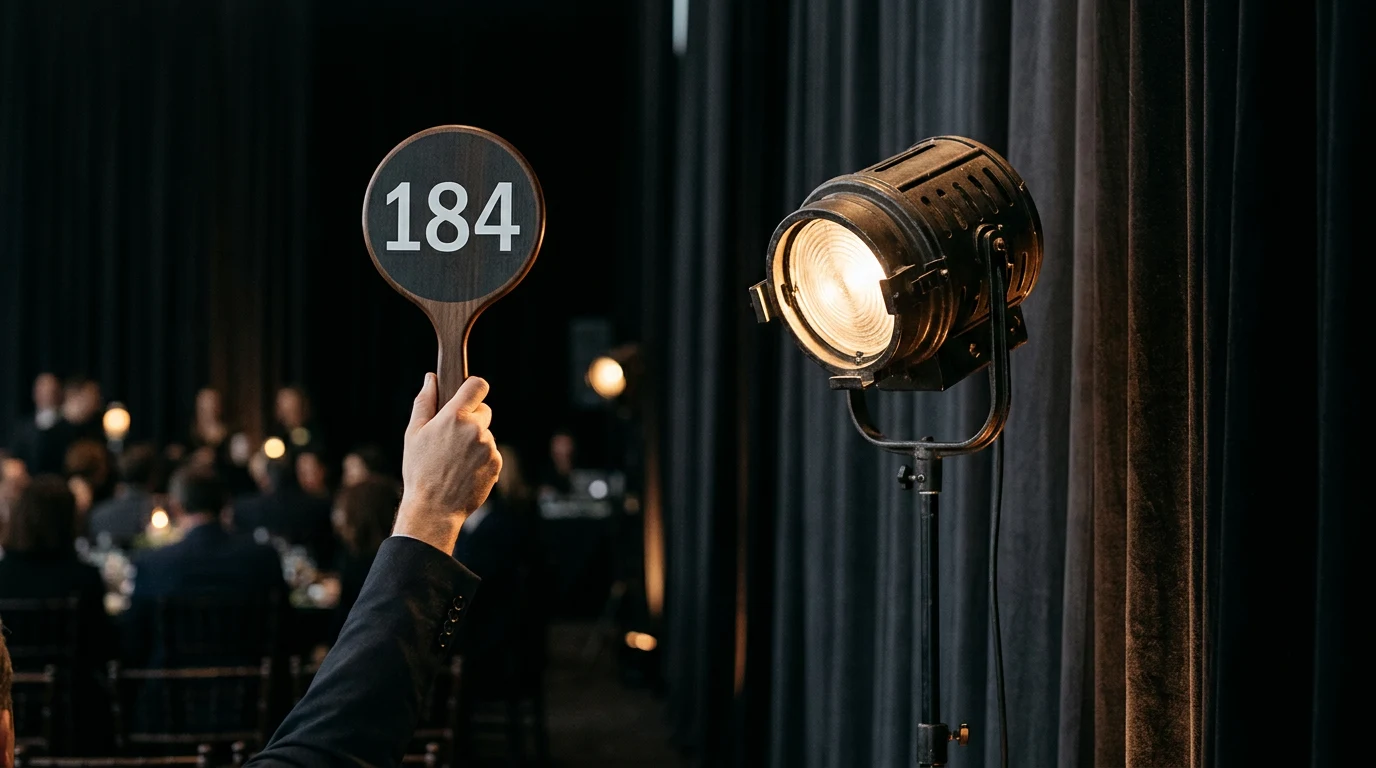
The evening's most sincere segment, run like a telethon and defended like a budget. The auctioneer calls giving levels — five thousand, twenty-five hundred, a thousand — and asks for paddle raises at each, while spotters record names, per the published run of show formats used across the benefit world. Every guest can participate, which is the appeal's point after two hours of watching tables spend: the room's hierarchy is suspended for four minutes, and the college student who bid on nothing can still give a hundred dollars to applause. Per fundraising associations' guides, well-run appeals are scripted to the minute and rehearsed, because the appeal's emotional register — warmth, urgency, zero embarrassment — is a production value like lighting.
How are auction lots sourced, and what makes a good one?
Through a year-round procurement trade that runs on the development office's relationships. Per the industry's planning guides, auction committees request lots from donors, local businesses, and the institution's own orbit — the museum gala's lots drawn from the exhibition's world, the hospital ball's from its physicians' and patrons' generosity. The documented formula for a strong lot is scarcity plus access: experiences money alone cannot book, framed by a story the auctioneer can tell in ninety seconds. Consignment houses supply guaranteed-value lots — travel packages and art sold at reserve, per published consignment practice — padding the catalogue where donor solicitation runs thin. What makes a bad lot is equally documented: anything the room can price online in ten seconds, which is why the golf-classes-and-gift-basket era of benefit auctions has quietly retired.
Do guests actually enjoy this escalation?
More than outsiders expect, and the enjoyment is engineered. The auction segments give the dinner a plot — per the profession's own materials, organizers pace the evening so no stretch runs without a bid, a result, or an appeal — and competitive bidding at a charity is socially frictionless because the competition's loser has, by definition, still funded the cause. Guests at marquee benefits bid, per credited coverage, partly for the lots and partly for the moment of being seen to bid. The machine's genius, if it has one, is that its self-interest and its philanthropy point the same direction for one evening a year, and everyone in the room is content to leave it that way.
How is the escalation sequenced on the night?
By design, in rising order, with the drama spaced deliberately:
- Cocktail hour: silent auction open, mobile bidding live, lots staffed by volunteers.
- Seated dinner: silent auction closes mid-meal, results tabulated while attention is captive.
- Live auction: six to ten lots, professional caller, the evening's largest single numbers.
- The appeal: paddle raise by level, closing the room at its collective peak.
The sequence's logic is psychological rather than financial: each stage legitimizes the next. By the time the auctioneer asks for five thousand dollars a paddle, the room has been bidding all night and calling it fun. That, per the profession's own materials, is the entire machine: escalation dressed as entertainment, closing on time, and banking more for the cause than any single polite ask ever would.