A pair of jeans walks into the Metropolitan Museum of Art. That, more or less, is the brief for the 2027 Met Gala, whose theme — "extraORDINARY: Fashion and the Poetics of the Everyday" — asks designers to treat T-shirts, puffers and paper as raw material for wearable art, per the Met's own announcement as reported by Her Campus. The evening lands, as it always does, on the first Monday in May — May 3, 2027 — and remains the single most-watched red carpet in fashion.
But the Met Gala is not merely a party with a dress code. It is a fundraiser for the museum's Costume Institute, a curated guest list assembled by Vogue, and an exhibition opening rolled into one evening. Understanding how those pieces fit together explains why an invitation is treated, as InStyle put it, as one of the industry's highest honors.
What is the Met Gala, exactly?
The Met Gala is the annual benefit for the Costume Institute, the Metropolitan Museum of Art's fashion department. Each year the event marks the opening of that department's spring exhibition, and the gala's theme, dress code and guest dressing all correspond to the show. The institution supplies the cause; the celebrities supply the spectacle; the photographers supply the reason the rest of the world watches.
The event's rhythm is famously fixed. It takes place in New York City on the first Monday in May — hence the affectionate nickname "Fashion Prom" that InStyle reports — and the carpet, the cocktail hour and the seated dinner follow a choreography that rarely changes. What changes is the theme, and with it, everything anyone wears.
How does the theme work?
The theme is not a whim. It is the title and argument of the Costume Institute's exhibition, curated by Andrew Bolton, the department's curator in charge, with support from curators Stephanie Kramer and Emily Mushaben for 2027, according to Daily Times. The red carpet is, in effect, the exhibition's loudest preview: guests are expected to interpret the show's ideas in three dimensions, on their own bodies.
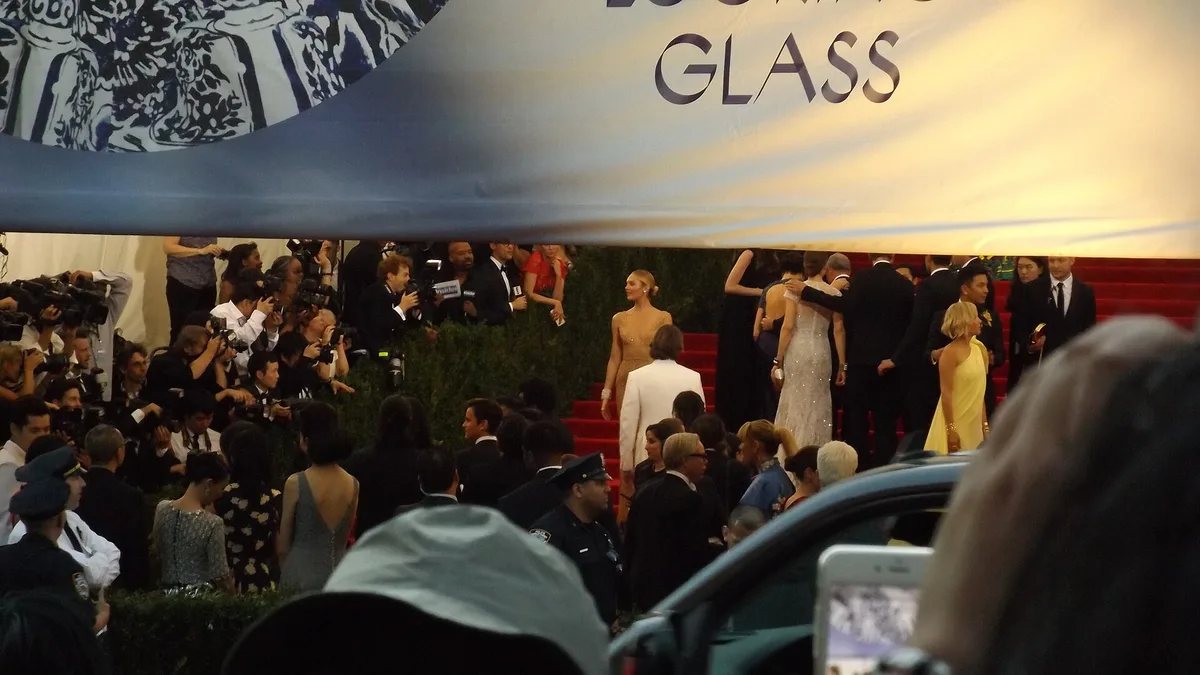
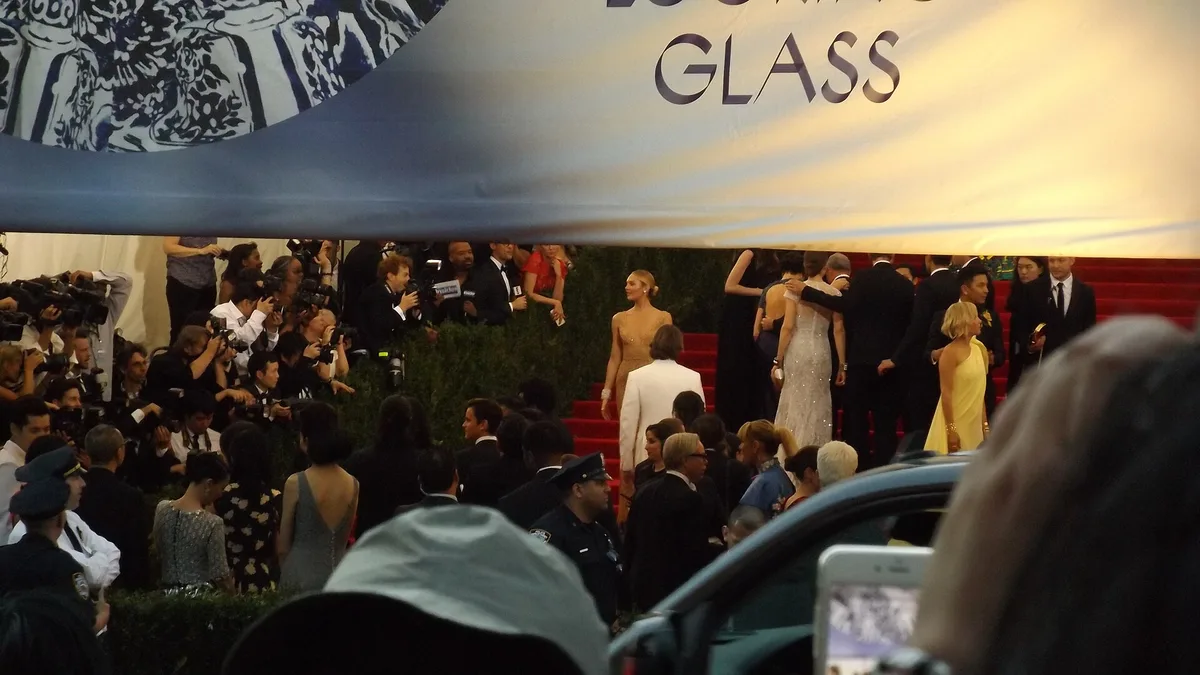
The results have ranged from the reverent to the absurd. InStyle's retrospective of the most memorable themes counts 2008's "Superheroes: Fashion and Fantasy," 2015's "China: Through the Looking Glass," 2018's "Heavenly Bodies: Fashion and the Catholic Imagination" — the one that produced Rihanna's pope-inspired look — and 2019's "Camp: Notes on Fashion," built on Susan Sontag's 1964 essay, which gave the world Zendaya as Cinderella and Katy Perry as a chandelier. More recent editions include 2021's "In America: A Lexicon of Fashion," 2024's "Sleeping Beauties: Reawakening Fashion" and 2026's "Costume Art."
Why did the 2027 theme change?
The 2027 story is a lesson in how much the host institution's reputation is bound up in the theme. The exhibition was originally announced as "John Galliano: Horizons," honoring the designer who led Givenchy, Dior and Maison Margiela. The choice drew immediate criticism over Galliano's history of racist and antisemitic public remarks, and W Magazine reports that museum donors threatened to withhold gifts. In August, Galliano withdrew, writing in a statement on Instagram that he did not want the debate surrounding him to place the Met in a difficult position or distract from the Costume Institute's work.
The pivot, announced on November 5, 2026, was dramatic: from one of fashion's most theatrical figures to the contents of an ordinary closet. Bolton told the New York Times, in an interview cited by Her Campus, that making do out of necessity and choosing resourcefulness as an artistic method "can involve similar techniques but very different circumstances" — and that the tension would be addressed in the exhibition. He also clarified, per the same report, that the new concept was not a standby plan; he had no alternative in mind until the cancellation forced one.
What will the 2027 exhibition actually show?
"extraORDINARY" is built in two parts. "Familiar Forms" looks at how designers reinvent archetypal garments — jeans, T-shirts, trench coats, biker jackets — through changes in scale, proportion, material and construction. "Common Matter" looks at clothing made from commonplace or disposable materials: paper, metal, plastic.
The checklist, as W Magazine details it, runs from a 1930s couture puffer coat by Charles James to Marc Jacobs's grunge collection for Perry Ellis, the Calvin Klein jeans from Brooke Shields's famous 1980 ad, Matthieu Blazy's trompe l'oeil leather jeans for Bottega Veneta, a 1993 Helmut Lang jacket, and silverware-adorned pieces from Maison Margiela and Hodakova. In total the show will feature 200 to 230 pieces, with 30 to 40 percent drawn from the museum's own collection and the rest lent or donated by fashion houses. It opens to the public on May 9, 2027 and runs through January 9, 2028.
Our analysis: the theme is quietly pointed. An event routinely criticized as elitist — the 2026 gala was sponsored by Jeff Bezos and Lauren Sanchez, a pairing that drew its share of derision — has turned its attention to the garments everyone already owns. Bolton has said he wants visitors to leave looking differently at the clothes they arrived in. Whether the carpet's million-dollar interpretations of a T-shirt read as ingenuity or irony is the question the evening will answer for itself.
Who gets invited, and what do guests wear?
The guest list is assembled annually by Vogue, which organizes the event with the Met, and attendance is by invitation rather than purchase — a seat at the table is a curated honor, not a ticket anyone can buy. Co-chairs, typically a handful of celebrities who front the evening, are announced ahead of time; for 2027 they have yet to be named, though W Magazine reports that Meta and Moncler are the event's sponsors. The dress code, which translates the exhibition theme into specific guidance for attendees, is usually announced closer to the night. Bolton, for his part, has said he hopes guests arrive in their versions of jeans, T-shirts and puffers.
That translation step is where much of the drama lives. A theme describes an idea; a dress code narrows it; a celebrity's stylist then makes a call that will be photographed ten thousand times. For a primer on how formal dress codes work at benefits more generally, see our guide to why gala dress codes matter — the Met simply plays the same game at the highest possible stakes. For related coverage, see How to Plan a Gala — How to Plan a Charity Gala: A Step-by-Step Guide for First-Timers.
What this means for the wider gala world
The Met Gala sits at one end of a spectrum the rest of the benefit circuit occupies. Its machinery — the curated list, the theme, the sponsorship, the exhibition it exists to fund — is an amplified version of what any museum gala or charity ball runs on, as we've traced in our breakdown of how the Met Gala actually works. The difference is scale and scrutiny: no other fundraiser's seating chart or hemline is dissected by millions within minutes. We covered a connected angle in Museum Galas vs. Charity Balls: Two Machines Built for One Job.
It is also a reminder that a theme is a governance decision, not just a creative one. The Galliano episode showed that an institution's honorees and sponsors answer to its donors and its public. Any gala committee choosing a theme or an honoree faces the same arithmetic in miniature — a point we've explored in our piece on how galas choose their honorees.
What remains unknown for 2027: the co-chairs, the official dress code, and how the men on the carpet will handle a theme built on basics — a perennial worry, if social media reaction quoted by Daily Times is any guide. What is settled is the date, the venue, the exhibition and the argument it makes: that a white shirt can hold as much imagination as a ball gown, if you look long enough.