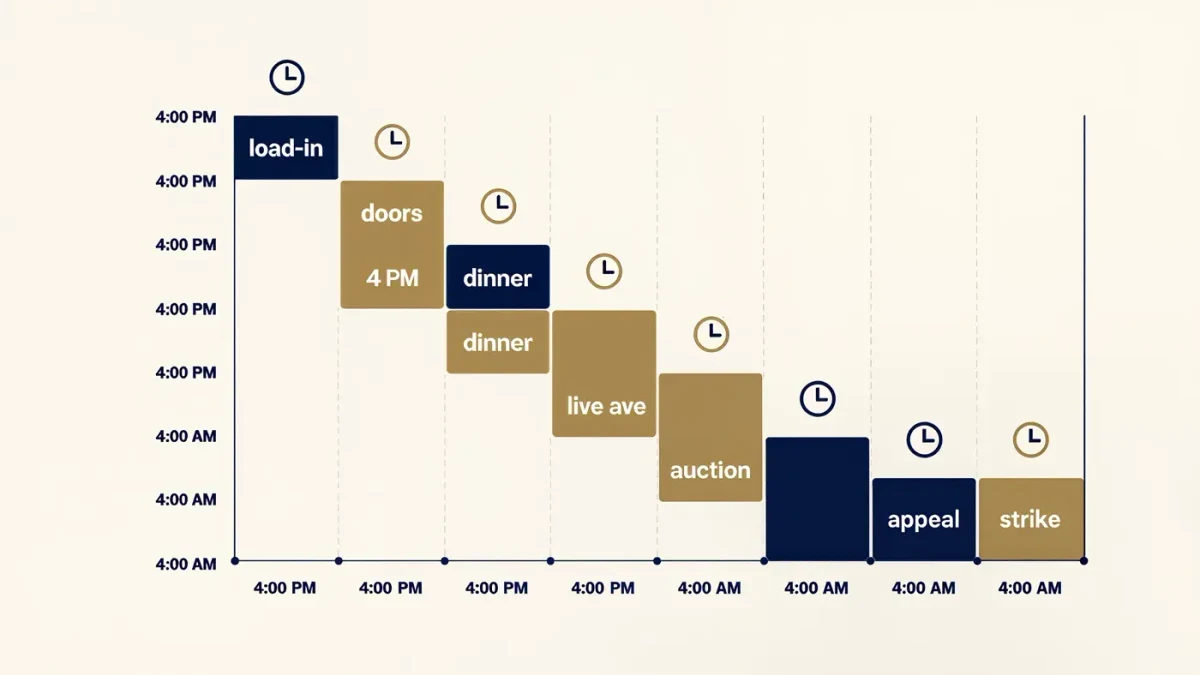
On gala night, the visible staff numbers roughly one per ten guests; the workforce that actually runs the evening — professional producers, a volunteer corps, spotters, runners, and crew — works a shift that starts at load-in and ends well after the last car leaves, per the run-of-show practice documented across the benefit industry. A marquee evening reported at more than $22 million in proceeds, cited to the museum for the Met's 2023 gala, does not execute itself: every course, cue, and paddle raise lands on schedule because dozens of people without place cards are timing it against a printed sheet. The guests' evening is three hours; the staff's is twelve.
This publishes information, not event-planning advice; the account below is reconstructed from organizers' published programs, volunteer-solicitation materials, and credited trade coverage of benefit production.
What does the producer actually do during the night?
Follow the run of show and enforce it, courteously, minute by minute. Per industry practice, the producer or show-caller works from a script timed to the minute — doors, first course, remarks, auction segments, performance, dessert — communicating by headset radio with stage managers, the band leader, the caterer's captain, and lighting. When a speech runs long, the producer trims elsewhere; when the room runs hot, the producer adjusts the room's temperature and tempo, both literally. Credited trade coverage of large benefits describes the discipline plainly: the evening the guests experience as effortless is the sum of perhaps two hundred cues executed on schedule, and the producer is the only person in the building who knows all of them.
And the volunteers — what are they actually doing?
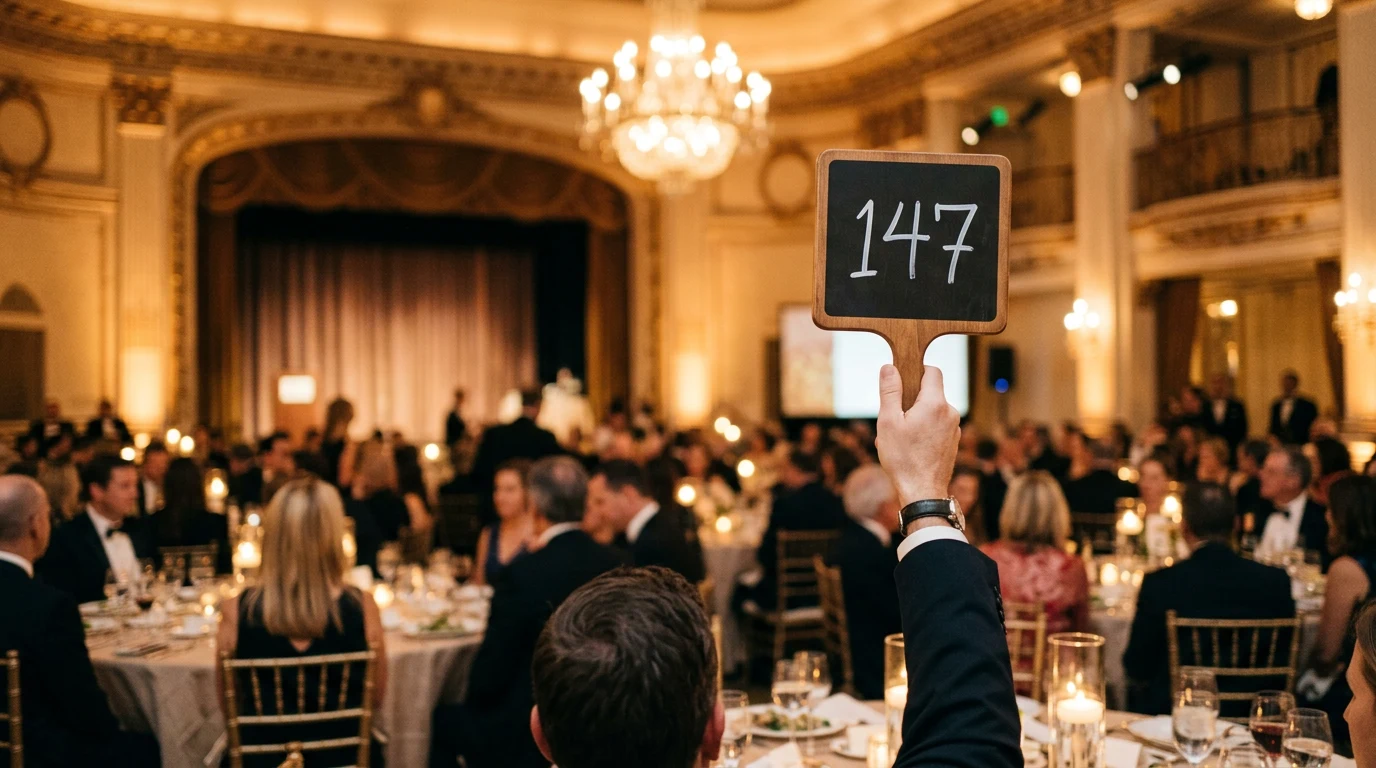
Everything visible that keeps moving. Per the volunteer-solicitation materials benefits publish, the corps staffs registration and coat check, shepherds guests from carpet to cocktail hour, manages silent-auction tables, sells raffle tickets, and — on auction nights — acts as spotters, recording paddle numbers at each giving level with the accuracy of forensic accountants. Volunteer shifts are typically scheduled in blocks of three to five hours, per the same materials, in exchange for admission, a meal, and the gala's least discussed privilege: watching the machinery work. The corps is a benefit's repeat labor force; per organizers' own materials, many volunteers return annually and graduate into host committees, which is the development office's intent all along.
Who is feeding everyone, and on whose schedule?
The catering brigade, working two dinners at once. Per standard banquet practice, the kitchen serves the ballroom's timed courses while feeding the crew and volunteers in an earlier, faster service called crew meal — eaten standing, in uniform, an hour before the guests see a first plate. The caterer's captain sits inside the producer's headset loop because a delayed course moves every cue behind it, per industry practice, and the dessert service is timed against the auction's close so the room is neither chewing nor starving during the appeal. Guests remember the menu; the run of show remembers the minute each plate landed, which is the only metric the kitchen is managed on.
What could go wrong, and who is standing by for it?
Everything, and the staffing assumes it. Large benefits run contingency roles the guests never see — per credited trade coverage, a stage manager holding understudy cues for a late speaker, spares of every microphone battery, medical staff posted discreetly, and a volunteer assigned purely to escort logistics for honorees running behind. Veteran producers describe the night as a calm surface over a decision stream: each small failure absorbed within a minute is invisible, and each one deferred becomes the story of the evening. The crew's professional pride, per the industry's own accounts, is measured precisely in how little there is to tell.
Who handles the money during the night?
A dedicated cashier operation, run like a small bank with better lighting. Per standard benefit practice, a checkout team reconciles silent-auction wins, live-auction invoices, and appeal pledges the same night — mobile bidding platforms have automated much of it, per the platforms' published practice, but a card terminal and a patient volunteer still close most transactions before the coats come out of the cloakroom. The speed matters financially: per fundraising associations' guides, same-evening collection rates materially beat the invoices-mailed-after model, because a guest's glow is the industry's most reliable form of credit.
What happens after the guests leave?
The second shift, undocumented by design. The crew strikes the room — tables, florals, staging — into the small hours, per industry practice; the cashier team finishes reconciliation; the producer's team drafts the debrief while the failures are still fresh; and the catering staff, per union-hour conventions, resets the kitchen for its next morning. A documented sequence, in order:
- Guest departure and car logistics, managed by the volunteer corps to the last umbrella.
- Strike: the room dismantled faster than any guest would believe.
- Money reconciliation: every pledge matched to a name before the staff disperses.
- Debrief: the producer's notes, the seating chart's lessons, next year's first memo.
The volunteers' last shift, per the industry's own accounts, ends when the money is counted; the producer's ends when the notes are written. Both leave through the loading dock, past the stacked chairs, carrying the only trophy the evening awards its own: the knowledge that the guests will never notice how any of it happened — which was, all night, the specification. The best review a gala crew can earn is no review at all, and by that standard most nights are triumphs.