A launch event on a budget works the same way a good collection does: one idea, executed with discipline. The party does not need an open bar or a famous DJ. It needs a reason to show up, a room that says something about the product, and a guest list built with intent rather than money.
The trade press has documented plenty of lavish debuts, but the durable lesson from the quiet ones is this — guests remember the concept and the crowd, not the champagne. Cut the spectacle, keep the story. Here is how PR teams do it when the venue and the bar tab are thin.
What does a launch event actually need to accomplish?
Strip it down and a launch party has three jobs: put the product in front of the right people, give those people something worth photographing or writing about, and leave them with a clear impression of the brand. Everything else — the bar, the florals, the aftermovie — is decoration.
That framing changes the math. If the product is the event, the budget goes to presentation and invitation, not to hospitality. A fragrance launch can be a table, a vase of the key flower, and forty well-chosen guests. A clothing drop can be a one-evening pop-up where the room doubles as the shop. The pop-up as launch format exists precisely because it turns a party expense into a sales opportunity.
What this means in practice: before spending anything, write one sentence describing what a guest should walk away saying. Every line item either serves that sentence or gets cut.
Where can the venue cost drop to zero?
Venue hire is usually the largest single line, and it is the one with the most legitimate workarounds. The obvious move is to use a space the brand already controls — the studio, the stockroom, the flagship back room. The next move is a space that wants the traffic: a gallery between shows, a café on a slow evening, a concept store happy to host for the footfall.
Off-peak timing is the other lever. As our own coverage of the events calendar has noted, launch parties follow the weather and the season — rooftop season exists because free sky is the cheapest set dressing in the business. A weekday morning breakfast launch costs a fraction of an evening affair and photographs just as well, particularly for beauty and food products where daylight is an asset.
There is even a case for bad weather. A small, warm, well-lit room on a grim evening reads as intimacy rather than scarcity — the argument our colleagues made in Who Launches in a Downturn: The Case for Bad-Weather Debuts. Constraints, handled with confidence, become tone.
How do you handle the bar and the food?
The open bar is where small budgets go to die. The standard workarounds are well established in the trade: a shorter event window, a single signature drink served in place of a full bar, wine or sparkling service only, or a dry launch altogether — increasingly defensible when the product itself is a drink, and tasting it is the programme.
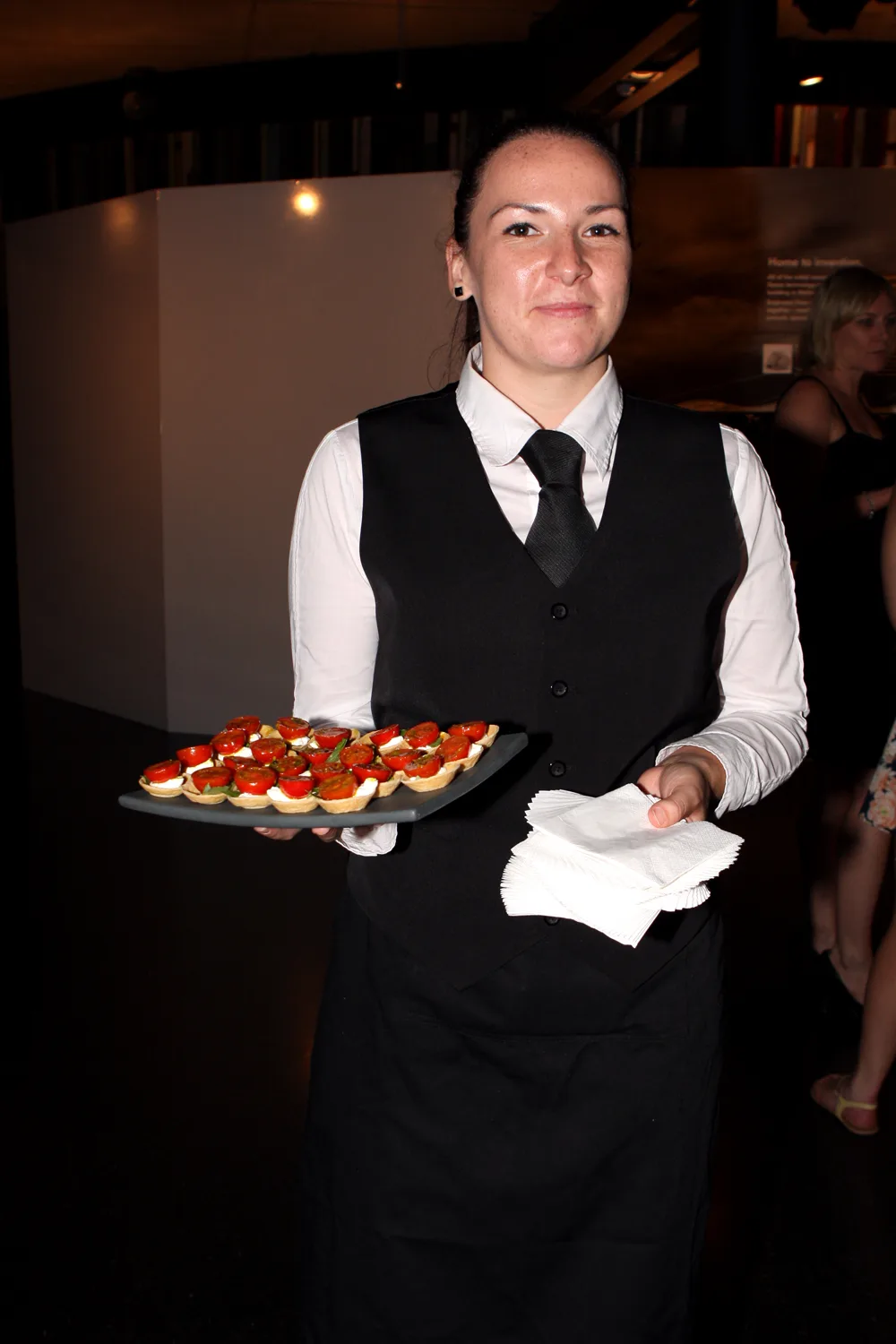
Partnerships help. A spirits brand or a caterer will often pour free in exchange for visibility to exactly the audience they want, which is a trade, not a gift — and it should be negotiated as one, with the terms written down. Food follows the same logic: passed canapés become a grazing table, a grazing table becomes a tasting of the product itself. Nobody left hungry complains quietly; everybody remembers a party that ran out of nothing it promised.
The honest version of this section: hospitality is the first thing guests notice when it is missing, so whatever is served should be generous within its limits. Two good things, abundantly, beats six thin ones.
Who should be on the guest list when you can't invite everyone?
A thin budget makes the guest list the most valuable asset in the room. Fewer invitations means each one matters more, and the criteria shift from reach to relevance: the buyers, editors, stylists and creators who can actually move the product, plus the existing customers who will post anyway because they already care.
The mechanics of that list are covered properly in Fashion Collection Launches: How the Guest List Is Built and in our piece on who makes the influencer guest list. The budget-specific point is this: a small room full of the right forty people outperforms a large room of the wrong two hundred, and it costs less to fill. Cap the list at capacity and resist the pressure to pad it.
One more trade is available: the content itself. Photographers, videographers and even venues will sometimes work at a reduced rate for portfolio material, and our look at the aftermovie pipeline explains why the images outlive the event. Budget for one good photographer before anything else on the production side.
What are the cheapest high-impact details?
A handful of low-cost moves consistently read as expensive. Lighting is the first: a dark room with a few well-aimed lamps costs almost nothing and flatters everyone in it. A single strong installation — the product staged once, properly — gives the photographers a focal point and the guests a reason to stop. Music from a considered playlist beats an indifferent DJ.
The takeaway or press kit is the other place a small spend works hard. A well-made card, a sample, a printed note — the essentials our guide to what the host actually hands the room walks through — send the story home with the people who can retell it. Even the language of hosting is older and cheaper than the industry: as the Cambridge Dictionary records, to "throw" a party is simply to organize and host one, and its business-English section adds the cautionary idiom "throw money at something" — spending without a plan. The idiom is the warning; the plan is the party.
Our analysis, for what the record is worth: the launches that succeed on small budgets are the ones that treat constraint as a brief. One idea, one room, one drink, one photograph — and a guest list that wanted to be there anyway.
What this means for your launch
The evidence from the events trade points one way: spend on the idea, the guest list and the photographs, and economize everywhere else. Choose a room that tells the product's story for free, serve less but better, cap the list, and give every guest something to carry out. A launch event on a budget is not a compromised version of a big one. Done well, it is a clearer one.