Contrary to every instinct the party industry holds, the downturn has a guest list of its own. Per the Kauffman Foundation's widely cited 2009 study, 57 percent of Fortune 500 companies were founded during a recession or bear market — and the fashion-beauty calendar tells a quieter version of the same story. Launches do not stop in a slow economy; they change shape, with the extravagant debut giving way to a leaner, more argumentative kind of opening.
Why does anyone launch into a weak market?
Because the downturn, per the standard analysis, reprices everything a launch needs: venues discount their dark Tuesdays, agencies negotiate, florists quote softer, caterers sharpen their pencils, photographers bundle their rates, and — the decisive line item — attention is cheaper, because fewer brands are competing for it. A launch that would drown in a crowded season can own a slow news week. The founders who open in bad weather tend to phrase it exactly that way: it is not that they are braver, it is that the room, the press calendar, and the audience's boredom are all suddenly affordable.
There is also the assortment argument. Per retail convention, a weak market clears out the me-too launches and leaves the shelves needing something to say; a product with a distinct reason to exist — a price that respects the moment, a category the incumbents neglected — meets less competition precisely because everyone else waited for sunnier headlines before committing a marketing dollar. The downturn is a filter, and passing through it is itself the story a new brand tells.
What does a downturn launch look like?
| Boom-era launch | Downturn launch |
|---|---|
| Destination spectacle, flown-in press | One city, one room, local list |
| Custom build and floral fantasy | Borrowed space, existing architecture |
| Open bar and gift suite | One pour, one beautiful object |
| Week of events | A single evening, tightly timed |
| Budget in six figures | Budget in the price of a good dinner service |
The compressed format is not merely cheaper; its defenders argue it is more honest. Per the documented habits of lean launches, a small room forces the guest list down to people who might actually buy, write, or stock the product, and a modest budget pushes the brand's story to the front — where the downturn itself becomes evidence of conviction.
Which categories launch anyway?
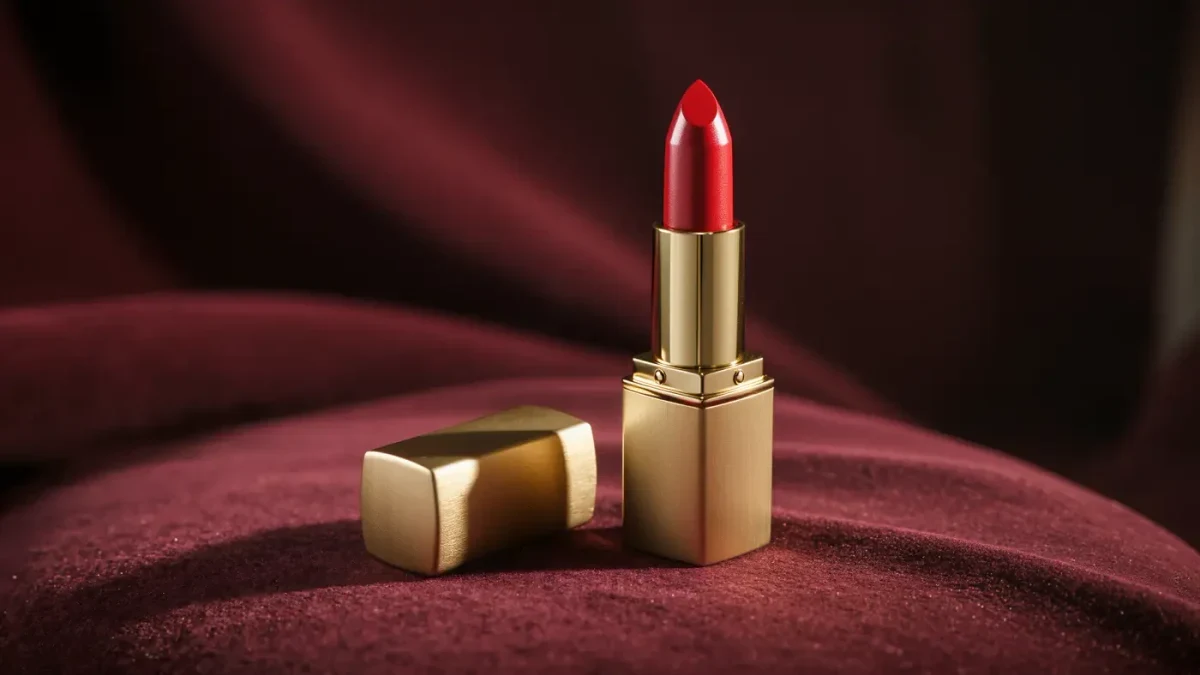
Per the historical record of recessions, the outliers are predictable once you look. Beauty's so-called lipstick effect — the coinage of Leonard Lauder, who observed in 2001 that lipstick sales held up as big-ticket purchases fell — has a documented modern descendant in fragrance and small-luxury launches that keep arriving through weak patches, on the theory that a $30 indulgence survives a $3,000 austerity. Value-positioned brands launch deliberately: the discount and dupes economy expands in downturns, and its entrants time their debuts to the gloom. And then there are the incumbents' counter-cyclical bets — the established house that launches a new line into the weakness precisely to take shelf space its timid competitors vacated, per the retail playbook's oldest page.
What are the real risks of a bad-weather debut?
The arithmetic is unforgiving. Per the way analysts describe weak-cycle launches, consumer budgets tighten first on the new and the unnecessary, which is what a launch is; press coverage shrinks with the advertising market that funds it; and a brand that debuts into a recession must survive longer on thinner early sales before its first full season arrives — a runway measured in seasons, not weeks, and financed on faith. The documented failure mode is not the small party but the long tail: launches that mistimed their inventory, then met a holiday season in no mood for newcomers.
The counter-case, though, keeps getting written. The Kauffman finding has held through subsequent downturns, and the fashion-beauty calendar regularly produces its bad-weather graduates — brands whose founding mythology begins with the phrase “we launched into a recession.” The downturn launch, it turns out, is not a contradiction. It is a bet, patient and slightly contrarian, that scarcity of confidence — like scarcity of anything else in this business — creates an opening — and that the party can wait, but the story cannot — and the story, unlike the party, gets better every year it is told.
How do downturn launches court the press differently?
With arguments instead of spectacles. Per the documented habits of lean launches, a brand with no floral ceiling to photograph must hand the press a thesis: that value is the new status, that the category has been overpriced for years, that this is what the moment wants. The downturn launch's press kit reads like an economic brief, and its founder gives interviews about belt-tightening rather than inspiration — a rhetorical posture that weak markets reward, since the conversation has already turned that way, and a founder fluently speaking it is welcome copy. Coverage, in this climate, comes to the argumentative rather than the ornamental.
Timing sharpens accordingly. Per the retail calendar's rhythm, launches slide earlier in the year, away from the crowded gifting season and toward the quieter weeks when a small story can actually be heard. The guest list contracts toward core buyers and loyal writers; the after-party, when it survives at all, moves to a nearby restaurant on separate checks. Everything about the downturn launch is legible as triage — and, to its founders, as focus.