The modern launch party is, among other things, a film shoot with a catered guest list. Somewhere between the step-and-repeat and the last pour, a crew of videographers is collecting the raw material for the aftermovie — the sixty-to-ninety-second recap film that, per the way agencies now pitch launch work, is the deliverable the party was always producing. The audience economics justify it: per YouTube's own 2023 announcement, Shorts alone were drawing over 70 billion daily views as of that year, and the vertical recap is fashion's most efficient way to buy into that attention.
What exactly is the aftermovie pipeline?
A production schedule disguised as a party. Per the standard agency workflow, one evening feeds a tiered output: the flagship aftermovie, cut within days and premiered on the brand's own channels; the recap reel, a shorter vertical edit for social within twenty-four hours; and a drip of standalone clips — a toast, a performance moment, a door opening — released over the following weeks. The party is shot for this outcome deliberately: producers now draft shot lists the way they draft guest lists, and the venue is scouted for its filmable moments before its capacity is counted.
The pipeline's logic is straightforward return on investment. A launch evening's budget buys one night; the content it yields extends that night across a month of posting, which is how the spend gets amortized in agency case studies. Per the trade's own accounting, a well-shot evening can produce a press set, a hero film, and dozens of social assets — the party as a content mine whose seam runs for weeks.
Who shoots it, and how?
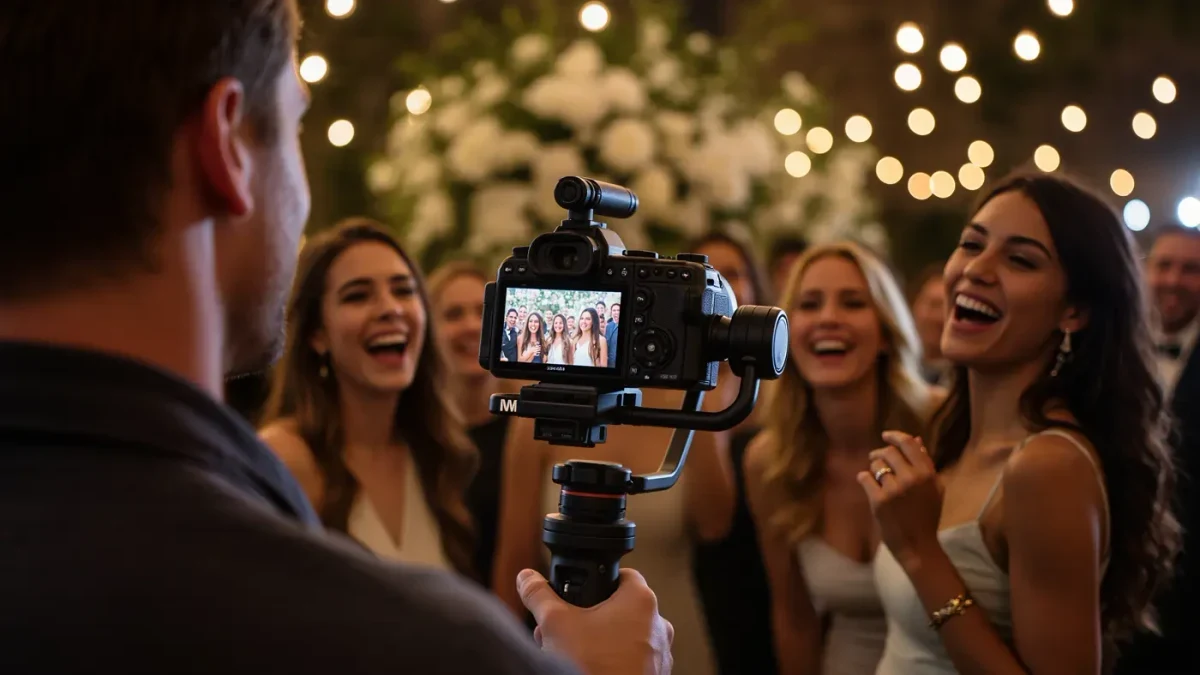
A small, documented crew: typically one or two videographers on gimbal-mounted cameras, a photographer for the stills set, and increasingly a content creator embedded in the guest list whose phone footage is commissioned alongside the professional package. Per the way production contracts describe the work, the videographer's brief has formalized — key moments are specified (arrivals, the founder's speech, the product reveal, the toast), faces are cleared for usage, and the music rights question is settled before the edit, not after. The crew works the room in loops, and guests have learned the choreography: the pause at the entrance, the glance to camera at the step-and-repeat, the impromptu dance break that everyone knows is not impromptu.
What makes a good aftermovie?
- A first three seconds that earn the scroll: per the short-form convention, the hook comes first — a reveal, a crowd surge, a look to camera — before any establishing shot.
- Vertical discipline: the flagship film may run horizontal, but the pipeline's workhorse is nine-by-sixteen, framed for the phone from the first take.
- One feeling per cut: editors describe cutting to a single emotional thesis — desire, warmth, exclusivity — rather than a narrative recap of the evening.
- Music as structure: the track is licensed before the edit and dictates its rhythm, per standard production practice.
- The product in every third frame: the aftermovie is an advertisement that has agreed to feel like a memory, and the discipline shows in the edit.
Do guests know they are footage?
Increasingly, and per the production contracts now standard in the trade, they have agreed to be: invitations for filmed launches commonly carry a photography-and-video notice, and usage terms for guest likenesses are settled in advance rather than negotiated after posting. The ethics are the industry's ongoing negotiation — publicists describe last-minute face blurring and takedown requests as routine costs of the format — but the direction is unmistakable. The launch party has become a set on which the guests are, by consent forms and by temperament, supporting cast.
The aftermovie pipeline, in the end, completes the launch's long migration from event to media. The party was once the launch; now the party is the shoot, the aftermovie is the launch, and the guests — glamorous, consenting, and camera-ready — are the distribution network. Every pour is a prop. Every toast is a take.
How did the pipeline change the parties themselves?
Quietly and completely. Per the documented practice of launch producers, venues are scouted for filmable sightlines before capacity, lighting plots are set for cameras rather than eyes — brighter than a party would choose, warmer than a studio would choose — and the run of show now contains explicit production beats: a moment when the crowd is arranged near the product, a timed toast, a pause in the music for the reveal. Even the guest list is partly a casting decision, weighted toward faces and followers the camera will flatter. The party has not stopped being a party; it has simply acquired a second audience that arrives after midnight, on a phone, forever.
Where is the pipeline heading?
Toward volume and automation, per the trade's own trajectory. Agencies describe clients commissioning more raw footage than ever and editing in-house, since the marginal cost of another vertical cut is nearly zero while its reach is not. Template-driven editing, licensed music libraries, and creator-shot packages have pushed professional-grade recaps within reach of small brands, which is why the aftermovie — once a luxury house's vanity film — now follows every store opening, product drop, and dinner of consequence. The launch evening, in this economy, is the cost center that never quite ends: it keeps paying out in content until the next launch arrives to replace it on the feed.