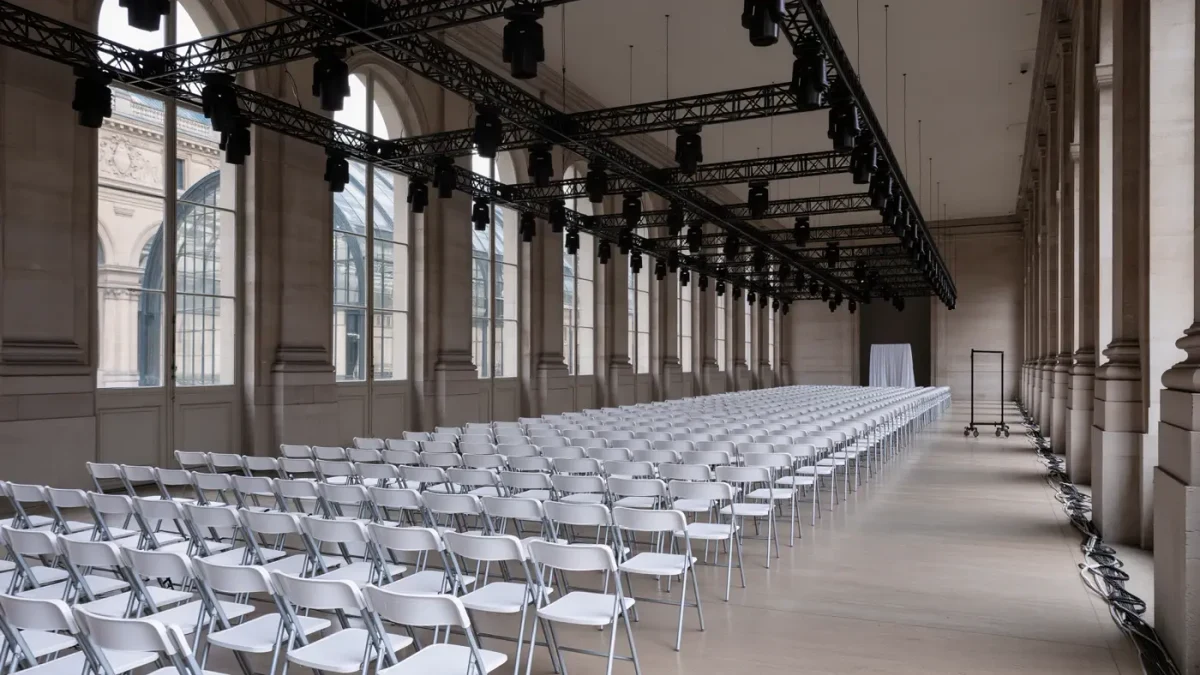
Brands pick launch venues the way casting directors pick faces: the room is hired to play a role, and the wrong one can sink the story before the first pour. The stakes sit against a retail backdrop where, per the U.S. Census Bureau's quarterly e-commerce report, online sales crossed roughly 16 percent of American retail as of late 2024. A physical launch has one job — to make the brand feel like a place. The venue is where that happens.
What is the venue actually being asked to say?
Publicists describe venue selection as a semiotics problem dressed as a logistics one. A raw gallery in TriBeCa says the brand is art-adjacent and serious; a private members' club says money without effort; a decommissioned bank vault says the product is precious and slightly transgressive; a rooftop says young, warm-blooded, and happy to be photographed. Before a shortlist exists, the brand's team writes what is sometimes called the venue brief: one sentence on what the room must communicate that the product cannot. Everything else — capacity, location, budget — is filtered through that sentence.
This is also why the same venue rarely serves two kinds of brands. The institutions renting themselves out for launch nights, from service bureaus listed in New York City's permit materials to museum rental offices, know the difference between a beauty house wanting softness and a sneaker label wanting concrete. Per their own rental documentation, most will ask for a brand deck before they ask for a deposit.
How much does geography decide it?
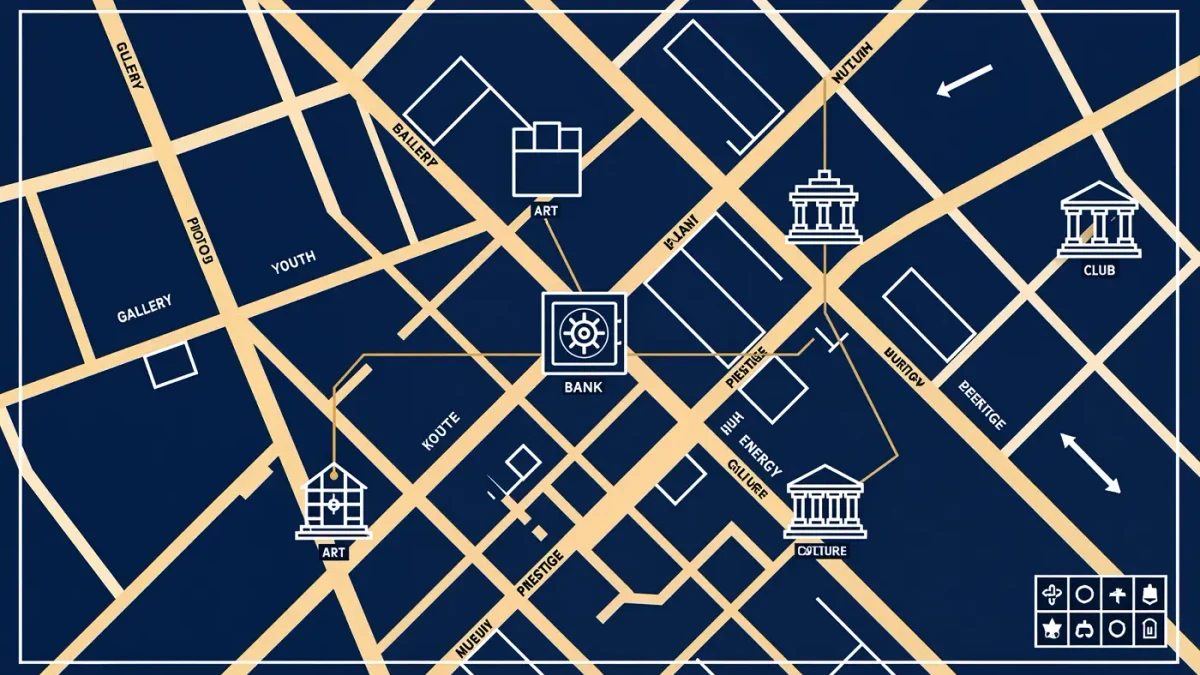
A great deal, and by concentric circles. The first ring is the press ring: venues are chosen within practical distance of the editors, stylists, and buyers whose attendance the evening depends on, because a brilliant space an hour from midtown will host a brilliant party for nobody. The second ring is the photograph ring — the backdrop a camera can read in half a second. A skyline, a cast-iron façade, a marble lobby: the venue must produce a sense of place that survives compression into a phone screen.
The third ring is the neighborhood's own meaning. Los Angeles offers itself street by street — Melrose for irreverence, Malibu for health and money, downtown for the art world's approval. New York runs the same system: SoHo for retail credibility, Chinatown for cool at a lower day rate, the Upper East Side when the brand wants its grandmother back. Per the way commercial brokers describe the market, launch-night geography is one of the few times a neighborhood's identity is traded as explicitly as its square footage.
What are the practical filters nobody sees?
- Load-in: the venue must accept a lighting crew, a floral team, and a step-and-repeat without flinching; freight elevators kill more grand plans than budgets do.
- Curfew and sound: per standard rental contracts, residential-adjacent rooms often carry hard 11 p.m. cutoffs that quietly decide the evening's shape.
- Weather exposure: rooftops are beautiful and negotiable only with a rain plan; producers describe the tent as the most expensive word in their vocabulary.
- Exclusivity clauses: a sponsor spirits house may demand that the venue pour nothing else for the night, which shapes the bar before the guests do.
- The sightline test: if the product display cannot be photographed without a coat rack in frame, the room fails.
Do venues ever say no to a brand?
More often than the guests would guess. Venue operators per their own published terms screen for brand fit, damage risk, and the kind of guest their regulars will tolerate at 11 p.m. on a Tuesday. A heritage institution will decline a party it considers off-brand; a tiny boutique will decline a list twice its legal capacity. The negotiation runs both directions, which is why producers keep waitlists of spaces the way publicists keep waitlists of editors. Every launch venue that gets booked was, somewhere down the chain, first auditioned.
The final selection, publicists concede, is a bet: the room cannot guarantee the party, only make the photographs plausible. When it works, the venue disappears into the brand's story so completely that coverage describes the product standing in a room as if the room had chosen itself. That disappearance is the booking fee doing its work — and the reason the venue brief, not the floor plan, is written first.
What does the room cost, and who pays?
Per the way venue operators publish their rates, launch nights sit at the expensive end of the rental market: a raw space in a major American city can rent for five figures a night before lighting, security, insurance, and catering minimums attach themselves like remoras. Heritage institutions charge more and give less — earlier curfews, stricter load-in rules, a coat of paint nobody may touch — and brands pay it anyway, because the institution's name lends its polish to the product standing inside it. Sponsors absorb part of the freight, per the standard trade practice of exchanging pours, product, and promotion for prominent billing on the invitation's back.
The secondary market keeps everyone honest. Spaces compete for the same Tuesday nights in launch-heavy months, brokers describe seasonal rate surges around fashion weeks, and producers keep lists of underused rooms — a gallery between exhibitions, a restaurant closed for dinner service — where the brand's money buys a better backdrop per dollar. The room, in other words, is a commodity with a costume department attached.
How has venue strategy changed since the pandemic?
The documented shift, per the way agencies describe their own post-2020 reels, is from square footage to content yield. A launch room must now be designed backward from the video: a clean central tableau that films well, a second look for vertical phone framing, lighting that flatters both the product and the guests standing near it. Enormous rooms photograph as empty; small rooms photograph as a scrum. Producers report favoring spaces of deliberate intimacy — 150-person rooms for lists of 300, so the overflow line itself becomes evidence of desire. The venue brief has quietly gained a second sentence: what the room must look like on a phone at nine, which is where most of its audience will actually meet it.