A show-stopping gown begins long before the first fitting. It begins with cloth that nobody else can get. Haute couture houses build their exclusivity on fabric choice, on made-to-order craft, and on rules that limit who may even use the couture name.
That system is why a red carpet gown looks like nothing on a rack. The fabric is picked, handled and shaped under conditions that ordinary fashion production never touches. This connects to our earlier piece, Inside the Met Gala: How Fashion's Biggest Night Actually Runs.
What counts as couture work
The term haute couture is protected by French law and defined by the Paris Chamber of Commerce. A house on the official list must follow strict rules. It must design made-to-order for private clients, with one or more fittings. It must keep a Paris workshop with at least fifteen full-time staff. It must have at least twenty full-time technical people in its workshops. And it must present a collection of at least 50 original designs twice a year, in January and July. Readers following this should also see Inside the Met Gala Guest List, Where the Real Currency Is Access.
Those criteria date to 1945. The body behind them, the Chambre Syndicale de la Couture Parisienne, was founded in 1868 as an outgrowth of medieval guilds. It has run an affiliated couture school since 1930. Those rules keep the craft inside a small group of ateliers, and that smallness is the point. It is what makes the label scarce.
Silk: the classic gown fiber
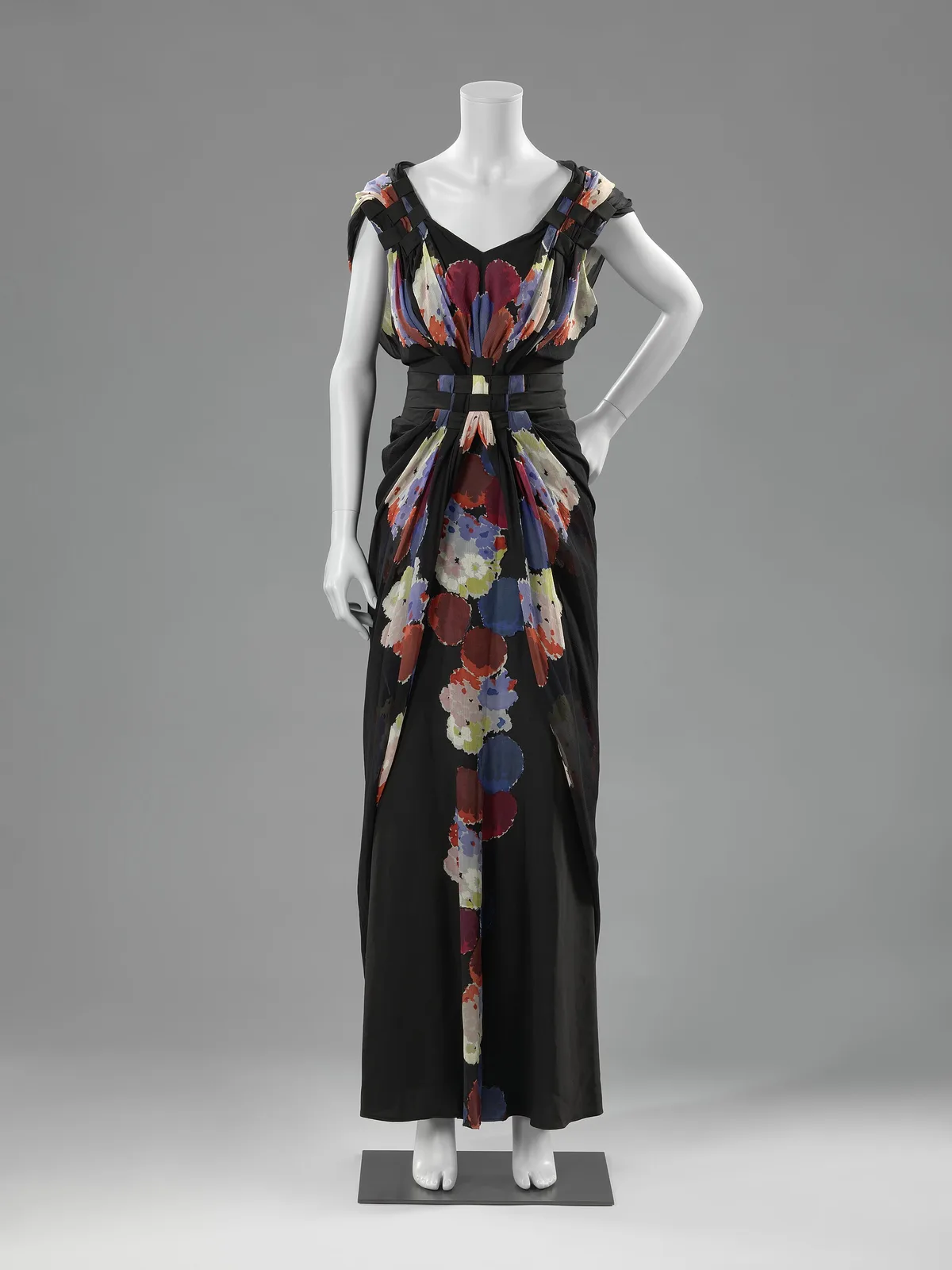
Silk is the backbone of couture cloth. Textile history traces silk to ancient China, as far back as the Neolithic age. It was once valuable enough to serve as currency. Its trade built the Silk Road, and that trade boosted the Chinese economy for centuries. Couture designers work across many silk types. The list includes dupioni, brocade, Jacquard and satin. Each has a job. Lighter chiffon silk drapes and flows with ease, which is why it shapes the movement of a gown on the body.
Wool and the rare fibers
Not all fine cloth is silk. Wool began as protection against cold weather, long before it became a luxury fiber. Fine wool comes only from a handful of sheep breeds, and dyeing it is delicate work. Wool soaks up color fast, so one careless step can ruin it. At the top of the range sit the luxury fibers. The list runs from alpaca, angora and mohair to cashmere, camel hair and vicuna. Each has its own texture and softness. Rarity is the point. A fiber few mills can supply is a fiber few houses can offer, and a gown cut from it cannot be copied by order.
How exclusivity is protected
Exclusivity is built into the system three ways. The law guards the couture label, and a Paris federation decides which houses qualify each year. History adds the second guard. French guilds long controlled who could make fine clothing for elite clients, and women dressmakers held guild rights as early as 1675. Made-to-order work adds the third. With fittings and one client, the finished gown exists for one body and one event.
The pull of Paris is old. In the 18th century, France saw what scholars call a clothing revolution, as wardrobes grew in size and value across every class. Rose Bertin, the dressmaker to Queen Marie Antoinette, helped carry French fashion abroad. Later, as railroads and steamships made travel easier, wealthy women rode to Paris itself to shop. French fitters and dressmakers were held to be the best in Europe, and a real Paris garment beat any local copy.
Conclusion
Securing exclusive fabric is not one trick. It is a chain. Rare fibers, protected labels, Paris workshops and one-client construction all hold it together. That chain is what separates a couture red carpet gown from ready-to-wear. It is also why the biggest houses guard their fabric sources as closely as their designs.