An archive look on a red carpet is rarely a lucky find. It is the end point of a process: a stylist decides the moment calls for history, a fashion house opens its vault or a vintage dealer opens its rails, and a garment that may be two decades old is located, authenticated, altered and insured in time for one walk across a carpet. The work happens months out, mostly by email and mostly unseen.
The appeal is easy to explain. An archive piece carries a cut that the current season does not make, a fabric weight that has fallen out of production, and a provenance that reads on camera. It also photographs differently. Older construction sits on the body in a way that modern samples, cut for speed and shipping, often do not. That is why archive sourcing has become a discipline of its own, with its own relationships, timelines and etiquette.
Where do archive pieces actually come from?
There are three main doors. The first is the house itself. Most major fashion houses keep an archive of past runway looks, and a handful maintain formal press archives that loan to stylists for shoots and appearances. Access runs through the house's press office, and it runs on relationships: a stylist who has dressed clients in the brand before, and returned the garments in perfect condition, gets the call when a vault piece comes up.
The second door is the vintage and archive dealer. Specialist dealers build inventories of documented runway pieces, often bought at auction, from private collectors or from former house staff. The good ones know the collection, season and look number of everything on their rails. The third door is the private collector, reached through a dealer or directly, who may agree to lend a piece for a single night under strict conditions. We covered a connected angle in The Second Look: Why the Night Begins Again After the Party Starts.
Each door has different friction. A house loan comes with control: the brand may weigh in on styling, may require approval of the final photographs, and may prefer the loan to serve a current commercial story. A dealer loan comes with a price and a deadline. A collector loan comes with nerves, because the garment is often the collector's favorite thing.
How does the search actually start?
It starts with a brief, not a garment. The stylist works from the event, the client, the carpet's lighting and the season. Then the research begins, and this is where archive sourcing separates itself from ordinary shopping. A stylist hunting a specific runway look needs to know which show it walked in, which look number it was, and what it looked like on the runway, not just in a grainy scan.
Old lookbooks, show invitations and early e-commerce pages are surprisingly useful evidence, and much of that paper trail has been preserved. The Internet Archive, a nonprofit digital library, explains that its Wayback Machine shows what websites looked like in the past, letting anyone enter a web address and pick a date to see archived snapshots. For a fashion team, that means a designer's website as it appeared when a collection was current: the product pages, the campaign imagery, the descriptions. It is free research material for dating a piece and confirming what it originally looked like.
Runway footage and press coverage from the season fill in the rest. The point of all this documentation is simple: an archive claim is only as good as its paper trail.
How is a vintage piece authenticated?
Authentication is a craft of small details, and the people who do it well have usually handled the real thing many times. Labels are checked against the era: fonts change, compositions change, and a label from the wrong period is the fastest way to spot a reproduction. Construction is checked next. Seams, linings, zippers and finishing techniques date a garment almost as reliably as a label, because houses change their methods over time.
Then comes the collection match. A dealer claiming a piece is a specific look from a specific season should be able to point to runway imagery or documentation that supports it. Condition is assessed honestly: a twenty-year-old gown has lived, and the question is whether its wear will show on camera and whether it can be safely altered. Fragile fabrics, degraded elastic and weakened seams all constrain what a tailor may do.
What this means for the reader: the authentication step is invisible when it works. The carpet shows only the dress. The label forensics, the seam checks and the documentation stay in the email thread.
What does the negotiation and loan look like?
Archive loans are contracts, however casually they are discussed. A dealer or house will want to know who is wearing the piece, what the event is, how the garment will be transported, who insures it and when it comes back. Insurance is the load-bearing clause: a one-of-a-kind runway piece is valued and covered for the loan period, and the coverage is arranged before the garment travels anywhere.
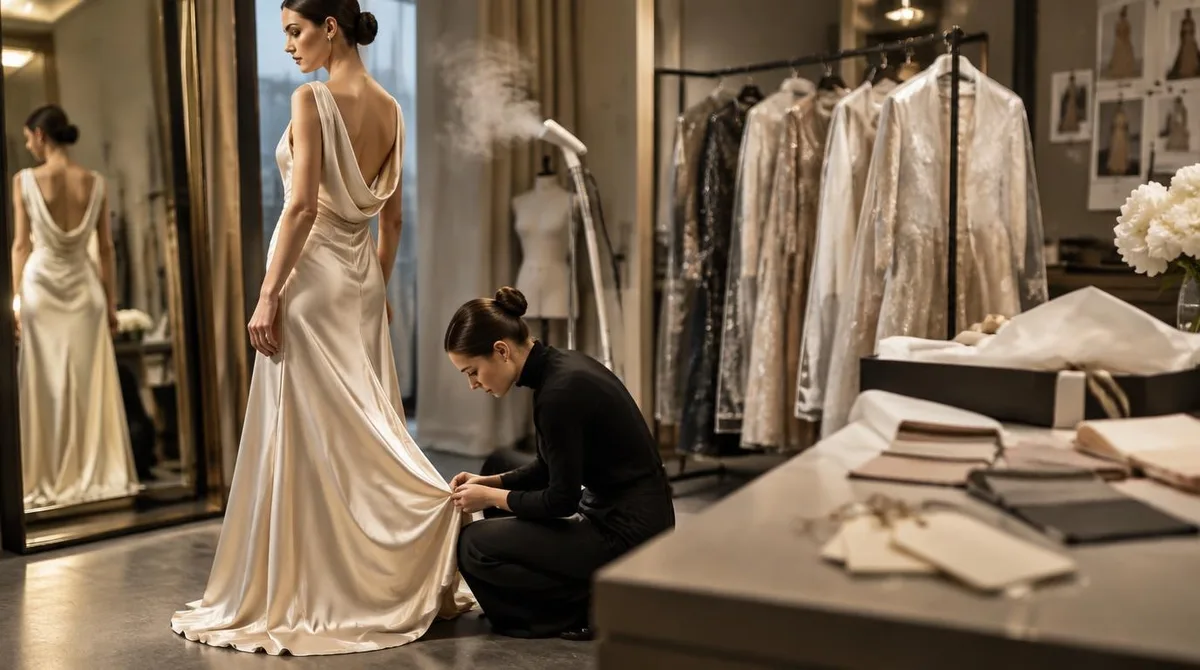
Alterations are negotiated too, and here the house loan and the dealer loan diverge. A house may permit minor tailoring by its own atelier. A dealer or collector often permits little or none, because alteration can permanently change a documented piece. The fitting therefore leans on what the garment already is, which is part of the discipline: the stylist picks the body of work knowing the body cannot be remade.
Timelines run long. A serious archive pull is planned weeks or months ahead, which is why the carpet calendar matters so much. Our analysis: the pieces that read as spontaneous on the carpet are usually the ones locked down earliest, because the garment had to be found, verified, insured and fitted before anyone could call it a decision. For related coverage, see How a Red Carpet Look Gets Planned Months Before Anyone Arrives.
Why does any of this matter beyond one night?
Archive sourcing changes what the carpet teaches. When a look from a past collection walks again, it argues for longevity over trend churn, and it sends readers hunting for the original rather than the copy. It also feeds the wider afterlife of carpet fashion, where garments move from the step-and-repeat toward auctions, exhibitions and museum displays, a path RSV TV Magazine has followed in detail.
There is a sustainability argument too, and it does not need to be overstated. Rewearing and recontextualizing an existing garment is, by definition, production-free. The practical takeaway for anyone dressing for a big night without a vault: start with documentation. Know what you are buying, ask for the provenance, and prefer the piece whose history you can verify over the one whose story merely sounds good.
The quiet conclusion
Archive sourcing is not nostalgia. It is logistics, scholarship and taste operating on a deadline. The relationships get the door open, the documentation proves the piece is what it claims to be, the contract protects a garment that cannot be replaced, and the fitting respects the original cut. What the evidence of the process establishes is that the perfect vintage red carpet moment is rarely found. It is assembled, carefully, by people who never appear in the photograph.