A fragrance launch is the fashion-beauty calendar's most contrived piece of theater, and by its own standards its most successful: per Circana's year-end beauty data, U.S. prestige fragrance sales stood at roughly $8 billion as of 2023, making scent the industry's growth engine while other categories stalled. The playbook that produced those numbers is remarkably consistent across houses — a perfumer story, a coded ingredient, a room designed to smell like the press release reads.
Why is fragrance the hardest product to launch?
Because the product cannot be photographed. A bag photographs, a lipstick swatches on a hand, but a scent travels only by anecdote, so the fragrance launch must sell everything around the liquid: the perfumer's biography, the raw-material mythology, the bottle, the mood. Per the way houses brief their own launches, the narrative is written before the juice is final — a launch memo typically names the perfumer, the hero ingredient, and one emotional thesis, and every element of the launch, down to the flowers at the door, must obey it.
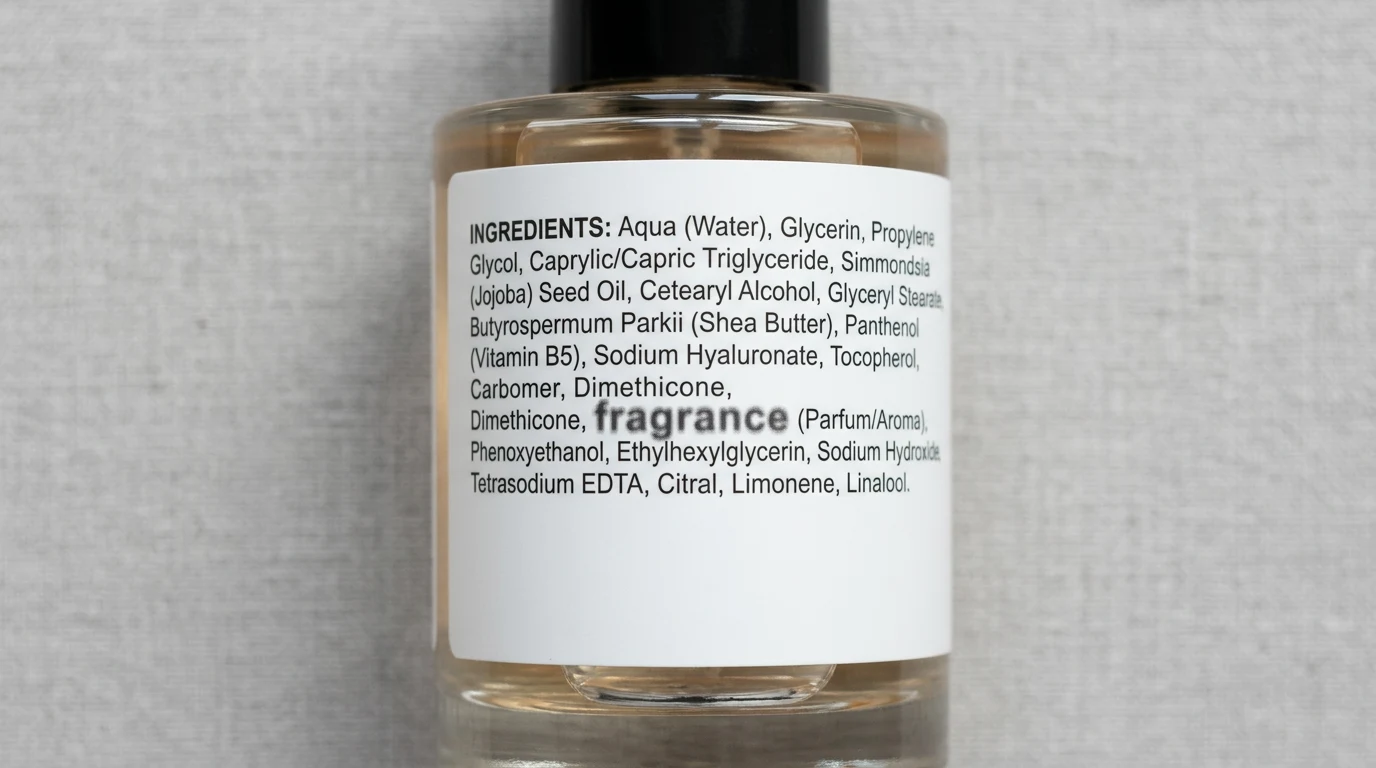
This is why fragrance launches speak a private language. Notes are described in terms of memory and place rather than chemistry; ingredients are encoded as exclusive-sounding materials with origin stories attached. The desk describes this apparatus as documented marketing convention, not as olfactory fact — the copy sells the story the house itself supplies.
What does the standard fragrance launch look like?
| Element | Standard execution | Why it survives |
|---|---|---|
| Perfumer front-loading | The nose named, photographed, quoted in every release | Authorship makes an intangible feel made |
| Hero ingredient | One raw material turned into a plot device | Gives press a hook the nose cannot supply |
| Immersion salon | Rooms themed to the notes; scent piped literally | Converts smell into an environment editors can describe |
| Bottle reveal | The flacon unveiled as jewelry, often by a glassmaker | Gives photographers an object to shoot |
| Discovery ritual | Blotters, coffee beans, guided sampling order | Scripts the guest's own experience of the product |
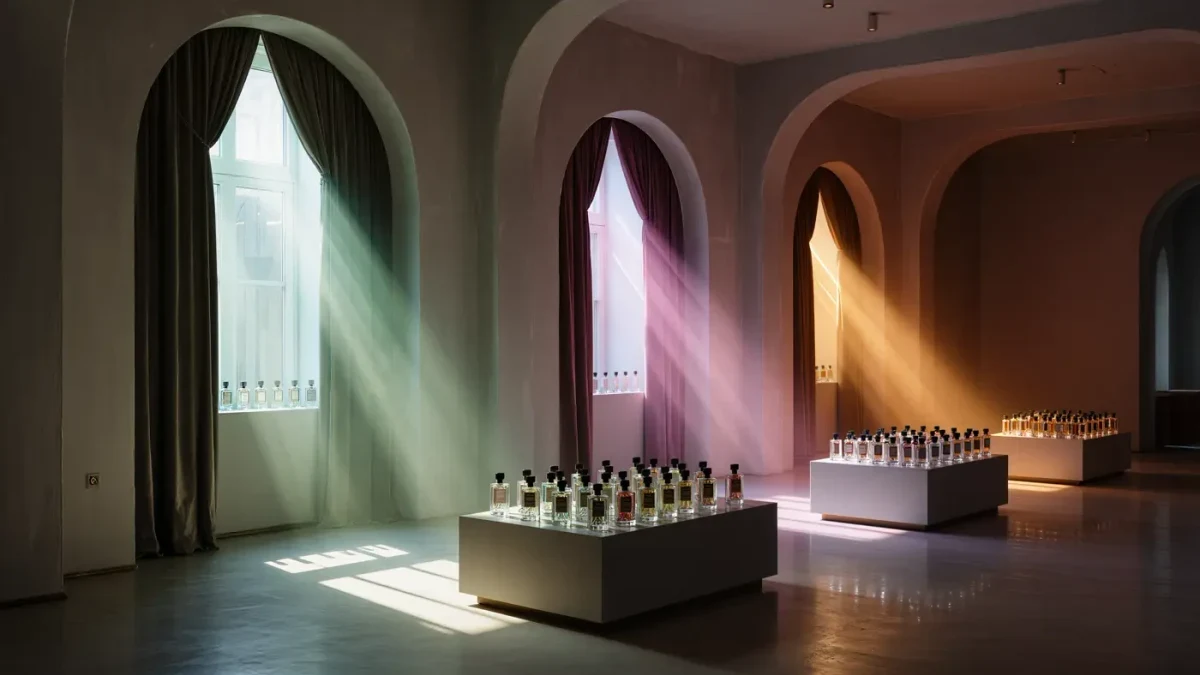
The salon is the playbook's set piece. Per the documented habits of beauty houses, editors file through a sequence of rooms — a citrus antechamber, a woody chapel, a musk boudoir — each scented to match the copy, so that leaving the building means walking the press release from top note to drydown. It is marketing as architecture, and its persistence across decades says less about creativity than about function: it is the only known method for making a scent legible on deadline.
How does the calendar shape fragrance launches?
Twice, deliberately. Per the industry's retail rhythm, the major launches cluster before the year-end gifting season and again in spring, when Mother's Day and wedding season justify the second wave. The gifting window is the revenue engine — fragrance is the default gift of the season — which is why autumn salons are the business's most lavish and why spring launches increasingly lean on flankers: new concentrations, limited bottles, and travel sprays derived from an established hit. The flanker, per the trade's own accounts, is the playbook's sequel economy, cheaper to launch because the original did the storytelling.
Who actually attends, and what do they take away?
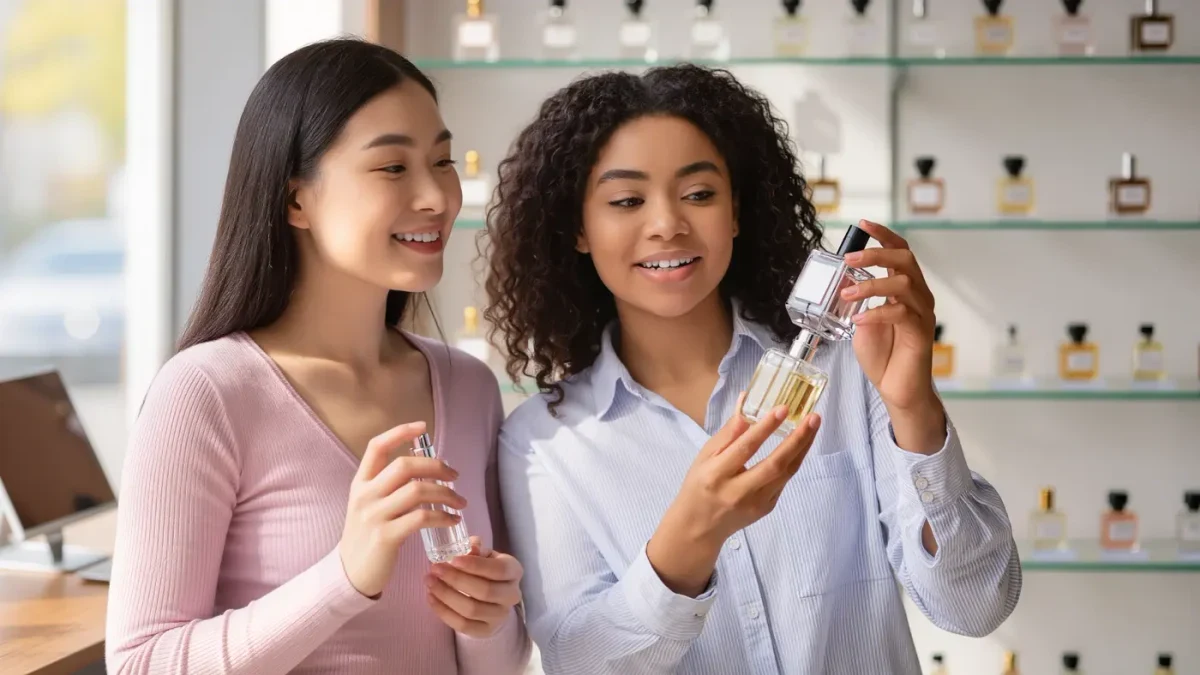
Beauty editors, fragrance content creators, retail buyers from the department-store beauty floors, and the house's own muses — a documented guest architecture repeated at every salon of the season. What each takes away is assigned: editors take the story kit, creators take the photogenic moment, buyers take the margin sheet and the counter plan. The guests smell the fragrance in guided order, because sampling protocol — top notes first, blotters over skin, no more than a handful per visit — is treated as seriously as the seating at any gala.
The playbook's durability, in the end, is its own review: fragrance keeps growing while categories with far easier products to photograph keep shrinking, per Circana's category data through 2023. The least visual product in the industry wins by staging the most visual launches in it — a lesson the rest of the beauty business has begun, expensively, to copy.
What does all this theater cost, and what does it return?
Per the way beauty houses budget, a launch salon with custom build, scent diffusion, catering, and press kits sits comfortably in the five-to-six-figure range, before media spend — a serious commitment for a product whose unit retail often lands between a lipstick and a handbag. The return is calculated on a longer fuse than most launches: a fragrance, if it survives its first year, becomes an annuity, restocked annually, gifting every December, and spawning flankers at a fraction of the original launch cost. That arithmetic explains the playbook's conservatism. Houses are not buying one good night; they are auditioning a thirty-year tenant for their counter space.
The counter, in fact, is the true venue. Per retail convention, a launch that fails to win beauty-advisor training, counter placement, and gifting sets has thrown a lovely party for nothing, which is why buyers rank among the salon's most quietly important guests. The room is the press strategy; the shelf is the business plan.
How has social media changed the playbook?
The documented change is in set design, not scripture. The classic salon assumed print editors who would write at length; the modern iteration assumes creators who will film sixty seconds, so houses now build the salon's most photogenic element first and theme the rest around it — a flower ceiling, a scent organ, a bottle-shaped doorway. Sampling has followed: discovery sets, once a counter afterthought, now double as creator mailers, and the guided ritual that once ordered a roomful of editors orders a tutorial instead. Per the trade's own accounts, none of this displaced the perfumer story or the hero ingredient; it merely gave the oldest narrative tricks newer rooms to perform in. The playbook, like the scent it sells, changes top notes and keeps its base.