A winter wardrobe list from a former VIP Nordstrom stylist is worth reading differently from a trend roundup. Sandy Koszarek, who worked as a VIP stylist at Nordstrom and now runs Stylish Sandy, shared the seven staples she is prioritizing this winter, and the reasoning underneath them matters more than any single pick. Per her piece, published November 8, the through-line is versatility: pieces that were easy to style for clients stay useful in her own closet, season after season.
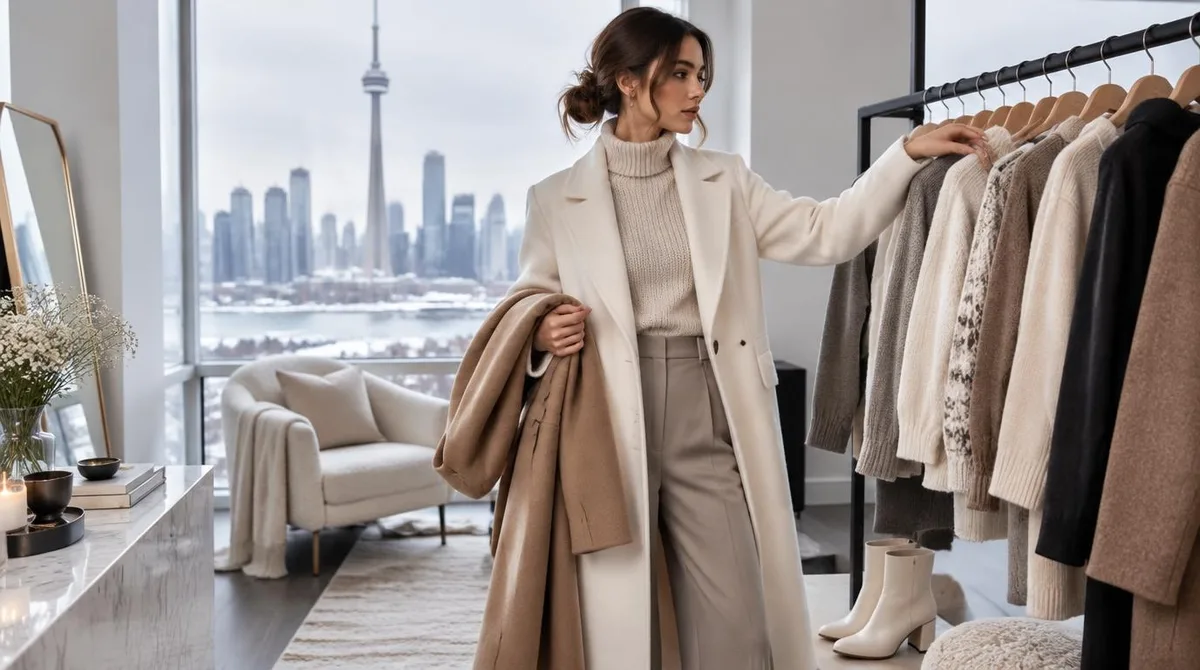
That framing is the tell. A retail stylist is paid to solve for many bodies, many budgets and many occasions at once, so the list reads less like a mood board and more like a fitting sheet. The seven items, as detailed on Yahoo, are cashmere sweaters, flat and kitten-heel boots, tie-front drawstring pants, faux-fur accents, tailored and wrap coats, printed and colorful scarves, and relaxed straight-leg jeans. Not one of them is a costume. Each is a neutral chassis that accepts whatever the wearer adds.
The same logic explains why stylists' picks so often outlive trend cycles, a pattern we have traced before in how red carpet fashion shapes what you buy. The pieces that travel from a fitting to a floor to a closet are the ones that require the least negotiation with the rest of the wardrobe. We covered a connected angle in Red Carpet Fashion Influence: How Red Carpet Fashion Shapes What You Buy.
Why does a stylist's own list favor neutrals?
Koszarek's cashmere section answers this directly. "I usually stick with neutrals and chocolate brown," she says, with one deliberate exception: "I'm adding a little purple this year, too." She singles out brushed cashmere for its texture and the way it "adds a little something extra" with jeans, trousers or a slip skirt. Read as a system, that is a wardrobe built to be recombined: a neutral base with a single controlled variable, so nothing in the closet ever conflicts with anything else.
Chocolate brown is worth pausing on. It is the quiet alternative to black that stylists reach for because it flatters more skin tones and pairs with more of what people already own. A purple sweater, meanwhile, is not a trend bet; it is a small, reversible experiment inside a stable structure. That is exactly how a working stylist would test color on a hesitant client.
What do the shoe and pant choices have in common?
Both solve the same problem: comfort that does not read as compromise. On boots, Koszarek is backing flat booties and kitten heels, noting that a kitten heel "adds a little height while still being comfortable" and that both shapes look chic with jeans and trousers. On pants, she is wearing relaxed drawstring styles that can "easily transition" from day to dinner. The common thread is a silhouette that photographs as intentional while wearing like loungewear.
For anyone assembling a long-life wardrobe, this is the most transferable advice on the list. A flat or low-heel boot earns its place by being worn hundreds of times; a drawstring wide-leg pant earns it by covering a meeting and a restaurant in one garment. Longevity, in her framing, is a function of how many contexts a piece survives, not how striking it looks once.
The coat as the load-bearing item
The outerwear picks confirm the priority. Koszarek "always" reaches for tailored wool coats, because a well-cut coat "instantly makes even jeans and a sweater look chic," and she pairs them with faux-fur collars that add "just the right amount of drama." A collar is a smart detail here: it transforms a plain coat and can be removed, which is the definition of an accent that earns its place without committing the whole garment to it.
Where do scarves and jeans fit the system?
The last two staples are the system's flexibility layer. Scarves, in Koszarek's words, are "such an easy way to add a little color and interest," worn with everything from sweaters and jeans to wool coats. Relaxed straight-leg jeans are the casual anchor, styled simply "with boots and a sweater." Together they let the wearer shift the whole outfit's register with one swap: tartan scarf up, jeans down, coat as the constant.
That is the real takeaway of the piece for anyone watching how retail stylists think. The list is not seven trends; it is one architecture, expressed seven ways: quiet base layers, one adjustable accent, and outerwear that carries the outfit. The same arithmetic runs behind the scenes at every red carpet fitting, where a look is built from a reliable foundation plus one deliberate statement. Koszarek has simply published the client-side version of it, in time for the deals season her article nods toward. Readers following this should also see How a Red Carpet Look Gets Planned Months Before Anyone Arrives.
What the piece does not claim, and neither should anyone reading it, is that these are the only seven things worth owning this winter. It is one stylist's tested kit, offered with her own reasoning attached. The useful move is to borrow the reasoning and audit your own closet against it: which pieces already work with everything, and which are still waiting for an occasion.