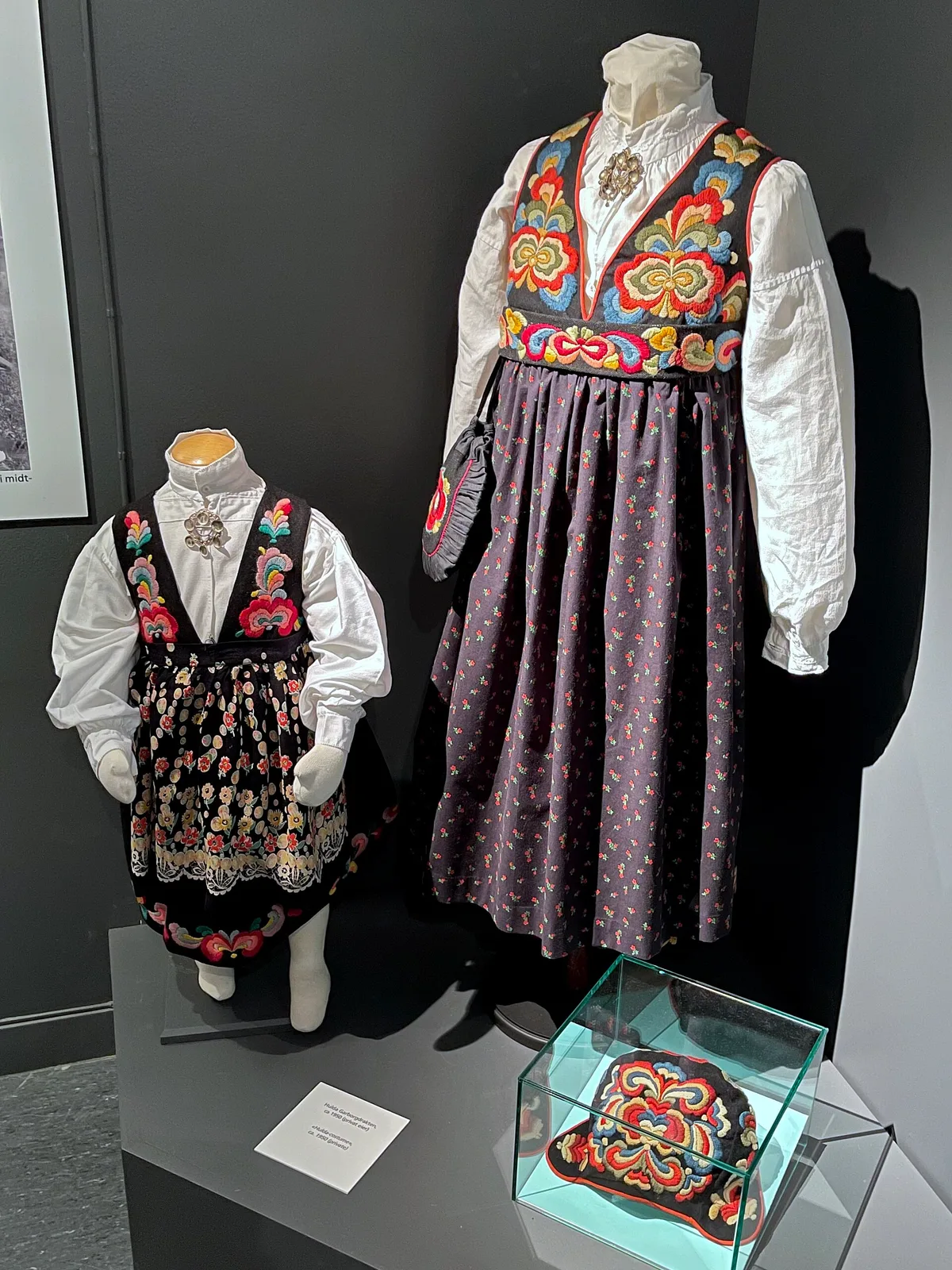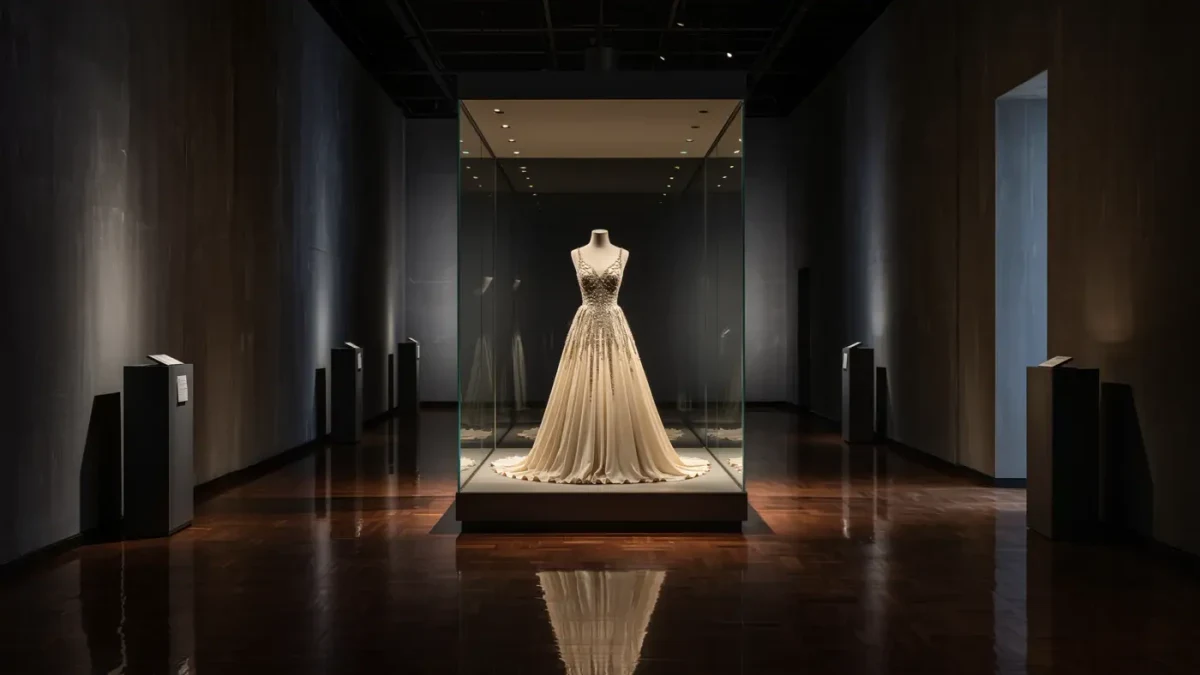
Red carpet fashion reaches museums through gifts, bequests, and loans from designers and houses — acquisitions that join costume collections already vast: the Metropolitan Museum of Art's Costume Institute holds more than 33,000 objects, per the museum's own collection documentation as of 2024. And when those collections go on display, the public's appetite is measurable: the V&A's 2015 “Alexander McQueen: Savage Beauty” drew 493,043 visitors in 21 weeks, a record for the museum, per the BBC's report that August.
The path from riser to vitrine is quieter than either number suggests, and it runs through curators, condition reports, and the fashion equivalent of provenance research. (The desk attended nothing; this account draws on museum documentation, auction records, and credited press reporting.)
How Does a Museum Acquire a Carpet Look?
Three documented doors. The first is the gift: houses and designers donate garments directly, often selecting the pieces with the strongest exhibition history — a carpet moment included in the offer letter. The second is the bequest, arriving through estates, as much of the historical costume canon did. The third is the loan, increasingly common for blockbuster shows: the house retains ownership while lending a carpet-worn piece for an exhibition's run, per standard museum lending practice. Purchase is rare at the couture level, because house archives have learned what their heritage is worth and price it accordingly.
Curators describe choosing as they choose everything: significance first — who wore it, who made it, what it documents about its year — then condition, then whether the piece can survive light levels that even museum glass cannot fully soften.
What Does a Gown Need Before It Can Be Exhibited?
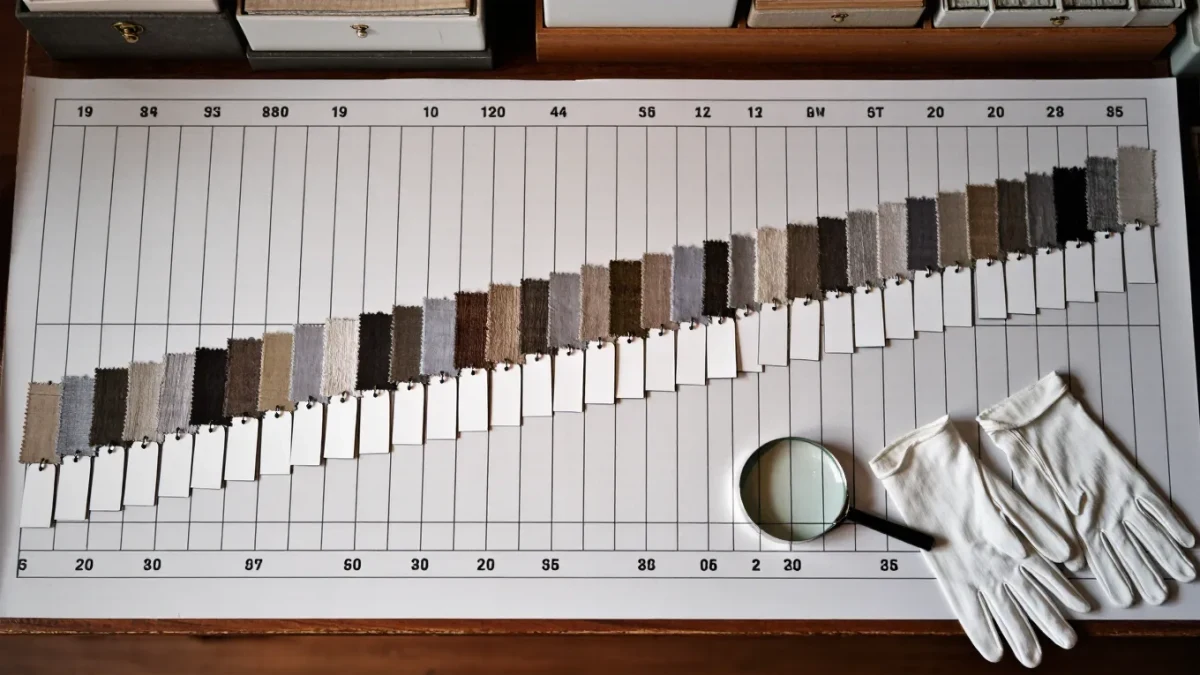
A condition report with opinions. Costume conservation is documented as among the discipline's trickiest: historic fabrics degrade from the very light that makes them photogenic, mannequins must be carved or cast to each garment's specific silhouette, and some pieces can stand for only months before rotating into dark storage. A carpet gown arrives with its own file — the loan or gift paperwork, the credit line fixing the wearer and occasion, and the alteration record showing what was changed for the body that wore it. That last document is why museums prize carpet pieces: they capture fashion meeting a specific body on a specific night, which is history a runway photograph cannot supply.
Why Do Fashion Exhibitions Draw Such Crowds?
The record is unambiguous. The McQueen retrospective's 493,043 visitors across its 2015 London run, per the BBC, broke the V&A's attendance record; its earlier 2011 presentation at the Metropolitan Museum of Art drew hundreds of thousands and was extended for weeks. Costume shows convert casual visitors the way blockbusters do, and curators note the subject's documented advantage: everyone wears clothes, so everyone arrives with opinions. Carpet-worn pieces anchor these shows because they carry the stories audiences already know — the carpet is the caption the visitor read years before buying a ticket.
Do Houses Ever Regret the Gifts?
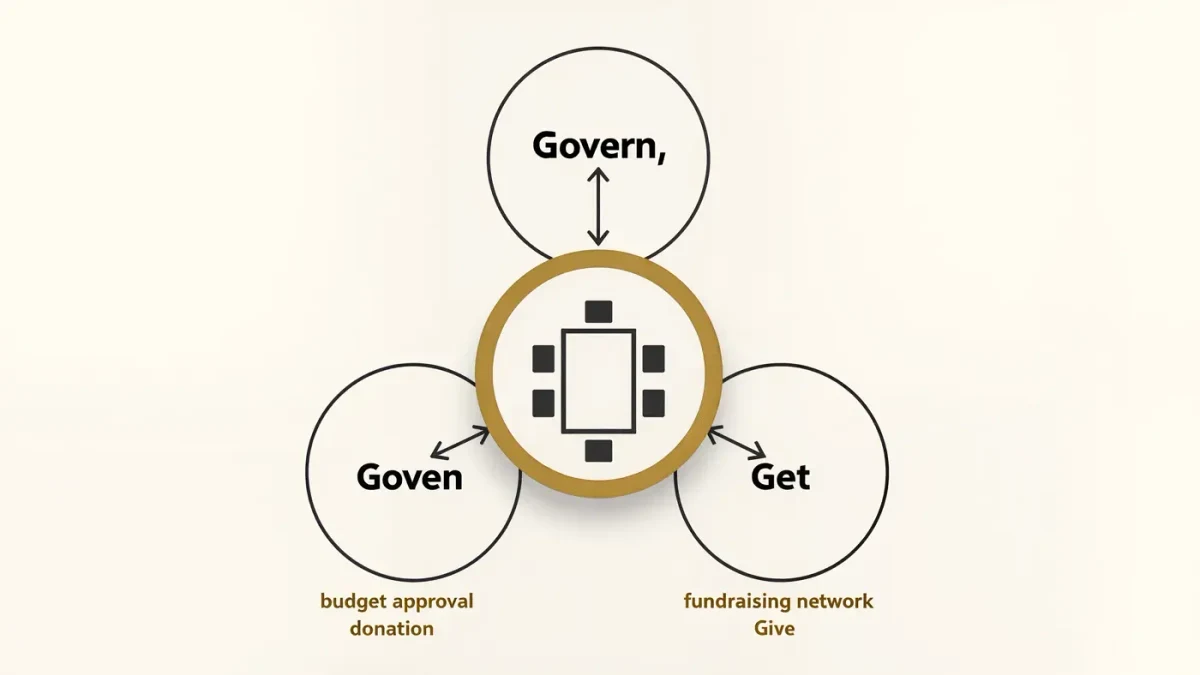
The archive's ledger suggests the opposite: the gift is the strategy. Donating a documented carpet look places the house's name inside an institution permanently — every label, catalog entry, and future loan request repeats it — while the museum absorbs conservation costs the house would otherwise carry. The exchange is philanthropy with excellent footnotes, and the museums' acquisition announcements, per their own press materials, credit the donating houses by name each time.
The loan economy deserves its own footnote, because it now moves faster than acquisition. For a blockbuster's run, houses ship carpet-worn pieces under couriered, climate-controlled conditions documented in loan agreements page by page — condition photographs before departure, handling rules on arrival, and insurance valued at figures the houses' archives set. The museum borrows the story; the house keeps the asset; the visitor sees both at once. When the show closes, the gowns travel home in the order they arrived, and the vitrine's next tenant is already in negotiation.
The loan economy deserves its own footnote, because it now moves faster than acquisition. For a blockbuster's run, houses ship carpet-worn pieces under couriered, climate-controlled conditions documented in loan agreements page by page — condition photographs before departure, handling rules on arrival, and insurance valued at figures the houses' archives set. The museum borrows the story; the house keeps the asset; the visitor sees both at once. When the show closes, the gowns travel home in the order they arrived, and the vitrine's next tenant is already in negotiation.
For the wearing room, the museum does one more quiet service: it slows fashion down. A carpet look's news cycle is a weekend; an exhibition gives the same object six months of viewing, wall text, and scholarly cataloging — a reinterpretation the house never controlled and cannot buy back. Curators are candid about the exchange's asymmetry: the carpet lent the gown its fame, and the museum repays by lending it context, which lasts longer. Long after the risers are struck, the label remains — name of the house, year, wearer, night — the only caption in fashion that is never embargoed.
The carpet keeps the photograph. The museum keeps everything the photograph cannot hold.
From Riser to Vitrine
- Acquisition runs on gifts, bequests, and loans; purchases at couture level are rare.
- Condition, provenance, and the alteration record decide what can be shown — and for how long.
- The crowds are documented: 493,043 visitors for the V&A's 2015 McQueen retrospective, per the BBC.