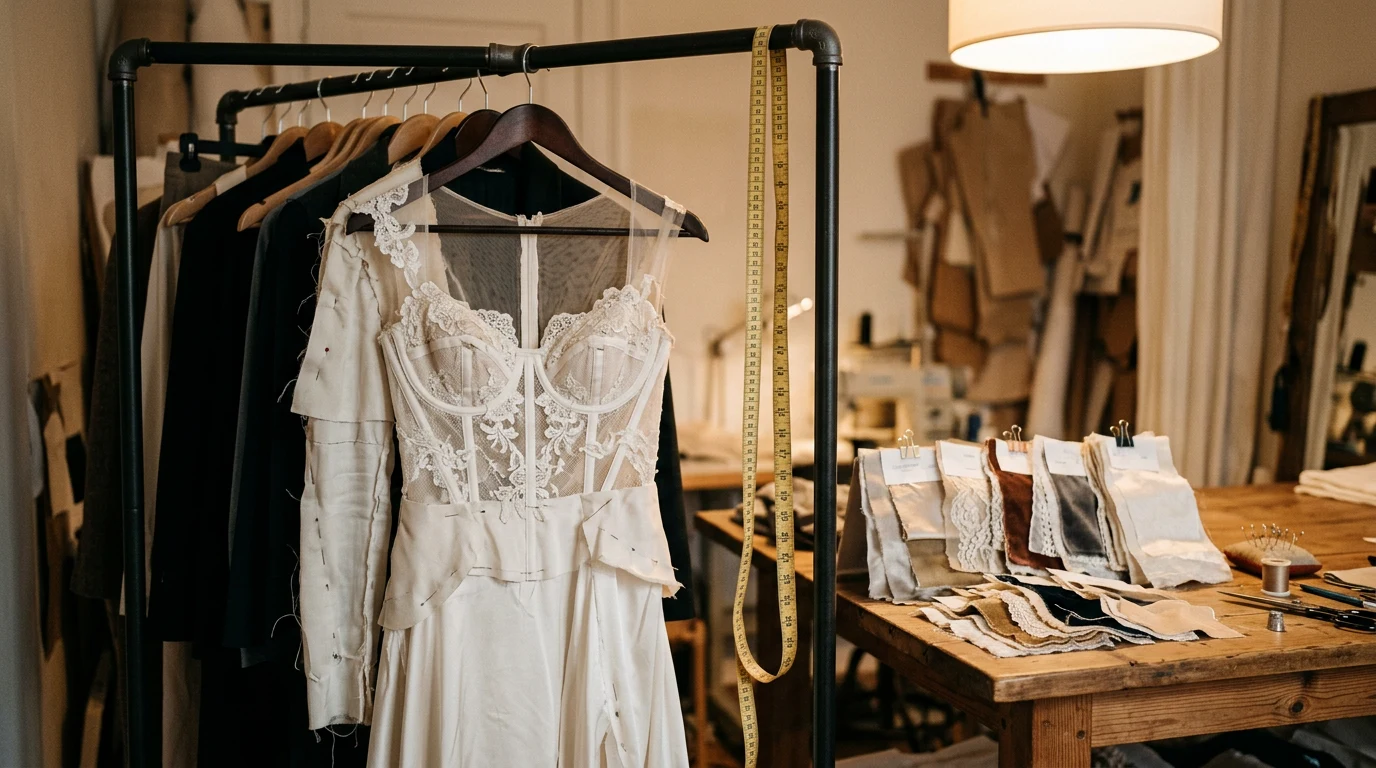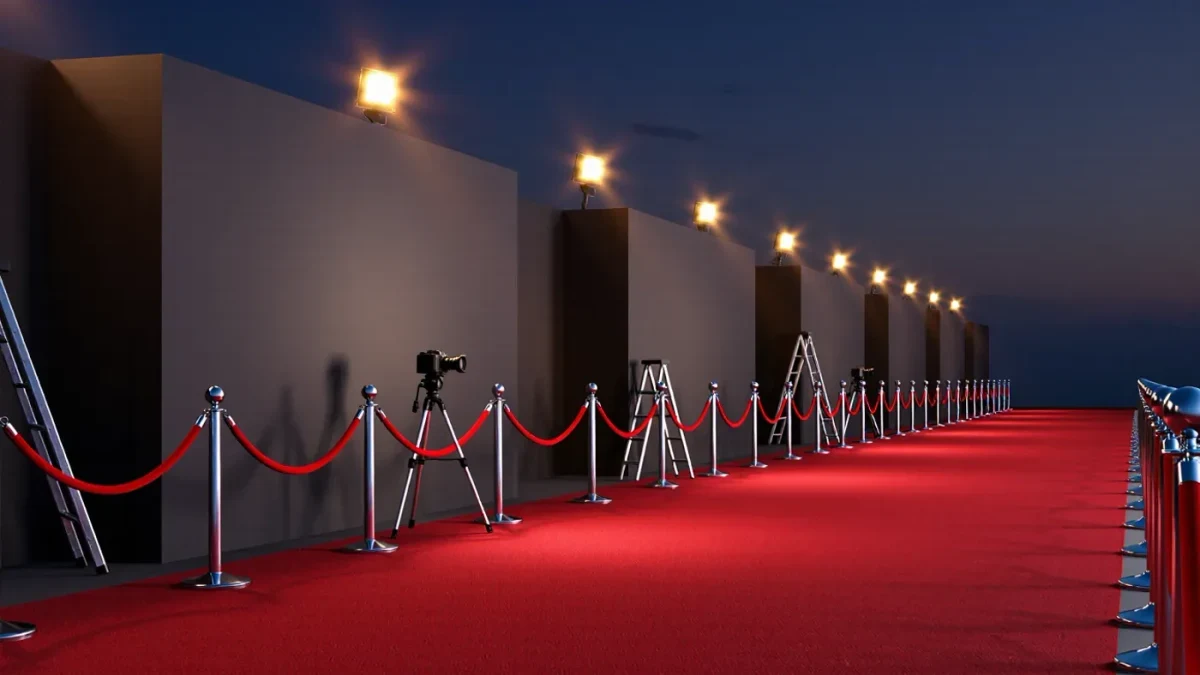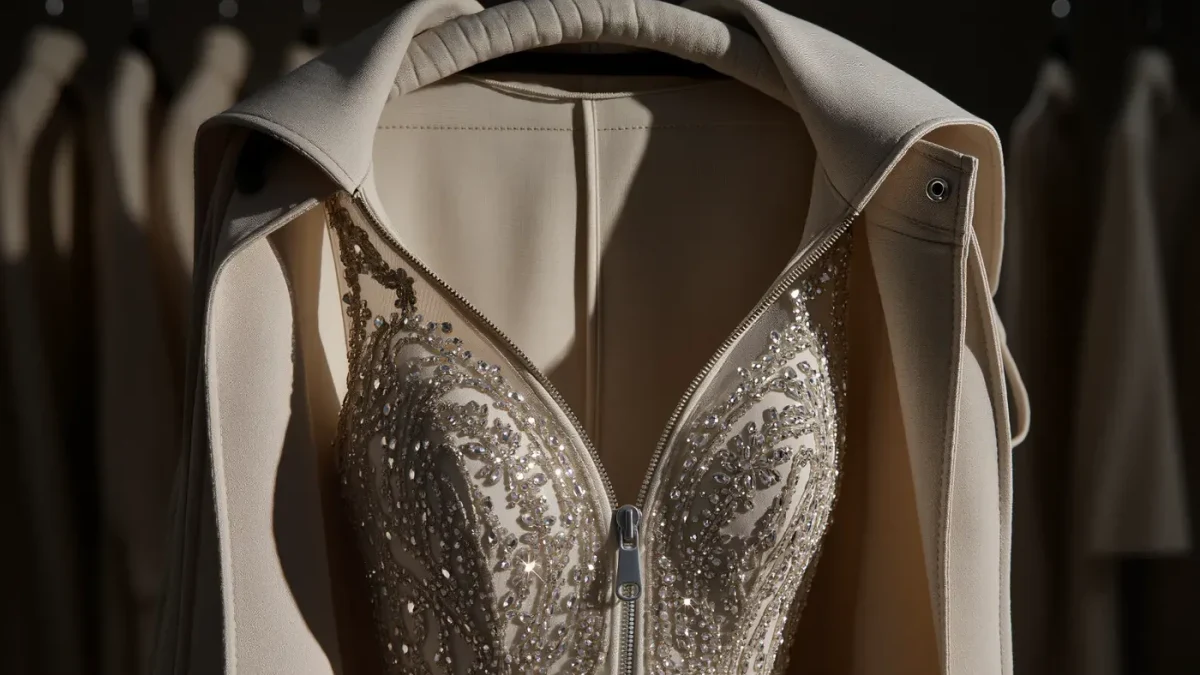
Outfit credits are held under embargo until the carpet itself: the house's press office confirms a look only for agreed uses at the agreed moment, and that moment is the arrival. The scale explains the discipline — a single major carpet can stage hundreds of guests, with reported guest counts for the 2024 Met Gala around 450 — and every one of those guests arrives attached to a credit line that dozens of publications are waiting to publish the second the first photograph clears.
The result is a system that looks like etiquette and works like a distribution schedule. (The desk attended nothing; this account is built from documented press-office practice, credited trade coverage, and the events' own published rules.)
What Exactly Is Under Embargo?
Not the photographs of the garment — the attribution. The embargo covers three layers of information, and the layers are worth separating:
- The house: who made the gown, confirmed by the brand's press office, often with the specific season or archive noted.
- The styling credits: the stylist, the jewelry house, the shoe — each supplied by its own press office, each with its own conditions.
- The occasion itself: for theme-driven events, what a guest is wearing before the carpet can signal the theme's interpretation, and events treat pre-reveals as a genuine breach.
A look published early — a fitting photo surfacing, a credit line quoted to the wrong outlet — can cost the client the exclusivity their loan was built on, and cost the outlet its access to the house's press office for seasons afterward.
Who Enforces the Embargo, and How?
The houses' press offices, which run the ledger. Each office keeps a documented list of which outlet has which credit, under which conditions, releasable at which hour. Publicists for the talent coordinate the timing so that a client's credit lands with coverage as the arrivals happen, not before. The enforcement is contractual in spirit rather than in courtrooms: the currency is access — samples, exclusives, first calls — and an outlet that burns an embargo spends currency it cannot quickly replace.
The system's teeth are quiet but real. Trade coverage over the past decade documents houses withdrawing samples and confirmations from outlets that broke agreed timing; the penalty is not a fine, it is the cold shoulder, and in a credit economy the cold shoulder is the fine.
Why Not Just Publish Everything Early?
Because the exclusivity is the product. A house lends a couture sample for the value of the moment: one client, one carpet, one credited photograph cycle. If credits were public weeks ahead, a competitor could dress the same client's rival in the archive's sister piece and flatten the story into a footnote. The embargo preserves scarcity — and scarcity, per the loans documented through pull letters, is the entire deal. The carpet's schedule makes each embargo self-executing: once the guest appears, the credit is common property, and the press offices' ledgers close for the night.
Do the Events Themselves Set Rules Too?
They do, and increasingly in writing. The Festival de Cannes updated its carpet charter for the May 2025 edition to restrict voluminous dresses with large trains, per the festival's published ticketing charter — a reminder that the organizations behind carpets issue their own documentation, and that guests' teams read it before the fitting, not after. Theme-driven galas communicate dress expectations privately, and confirmed details of what any guest will wear stay under the same embargo discipline as the credits themselves.
What Happens When an Embargo Breaks?
Documented outcomes cluster into three: the outlet loses the house's confirmations going forward; the client's camp loses leverage over future loans; and on rare occasions a look is pulled entirely — the sample recalled, the alternative fitted, the narrative rewritten inside 48 hours. Stylists keep a fallback for exactly this reason. The public sees a gown; the press offices see a counterparty that changed price.
How Do Journalists Work Under a Credit Embargo?
By preparation. Outlets covering a carpet receive confirmed credit lines in waves as guests arrive, which means the stories are largely written in advance: background on the houses, on the stylists' documented histories with their clients, on the event's theme — all drafted before the first car door opens, with the night's specifics slotted in on arrival. The embargo, properly honored, is not a hurdle to coverage. It is the reason coverage can be both instant and accurate: the facts arrive pre-verified, timed to the photographs they describe.
The system has its comic edges — an entire industry agreeing to pretend, for 12 hours, that it does not already know what 450 people are wearing — but the edges hold, because everyone signing the agreement is also signing the next one.
What Does the Client's Camp Actually Negotiate?
Timing, exclusivity, and framing — in that order. Documented publicist practice distinguishes between an exclusive (one outlet's credit confirmed for a defined window), an embargo (many outlets, simultaneous release on arrival), and a hold (a detail — an archive piece, a jewelry loan — withheld entirely until the client's own team publishes it). Each tier trades reach against control, and teams pick differently by event: a theme-driven gala rewards a coordinated simultaneous release, while a solo premiere may favor a single exclusive that keeps one outlet telling the story for a full news cycle.
The negotiation is conducted in writing, weeks out, and the deliverable on the night is anticlimactic: a press office sends a one-line confirmation to a distribution list, timestamped to the carpet. Months of leverage, cashed in a sentence.
The embargo is the fashion industry's oldest agreement: nobody speaks before the first flash.
The Rules of the Game, Briefly
- Credits release on arrival, coordinated between house press offices and talent publicists.
- Enforcement is access-based: samples and confirmations are the currency, timing the contract.
- Events issue their own written rules — Cannes's May 2025 charter on trains being a documented example.